
Reviewed · CITY TOURS
The Best Baku City Tour
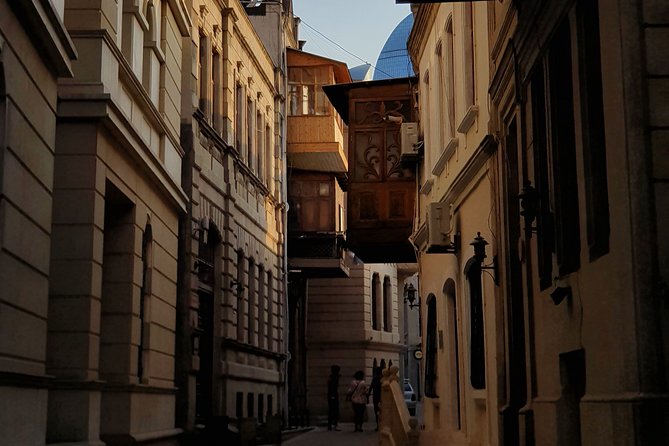
Baku is a city of contrasts, and this tour takes you through the blend on foot, starting in Icheri Sheher and rolling out toward the sea. I like how the route pairs standout landmarks like the Maiden Tower with the stories behind them, so the places feel connected instead of random stops.
I also like the human side of it, the guides described in real experiences, including Abdullah and Huseyn Ourbakli, tend to talk in a clear, friendly way and keep the pace practical for a first visit. One possible drawback: the route is packed into 3 to 4 hours, so if you want to linger hard in every room or courtyard, you may feel slightly rushed.
Key highlights if you like history you can see
- Maiden Tower mystery in the real Old City setting, with a sea-facing view and local legend-level uncertainty
- Palace of Happiness, a love-story building copied from Italy, tied to oil-era millionaire Muxtarov
- Miniature Books Museum, the only museum of its kind in the world, started in 2002 with a huge 30-year collection
- Baku’s Old City UNESCO core, including the walls and buildings that shaped centuries of life in the walled quarter
- Shirvanshahs Palace, a free palace complex with restored courtyards, rooms, and bathhouses
- Highland Park viewpoints, reached by funicular or stairs, for a practical top-down view of the city and bay
A Smart Half-Day Walk Through Baku, from Icheri Sheher to the Caspian
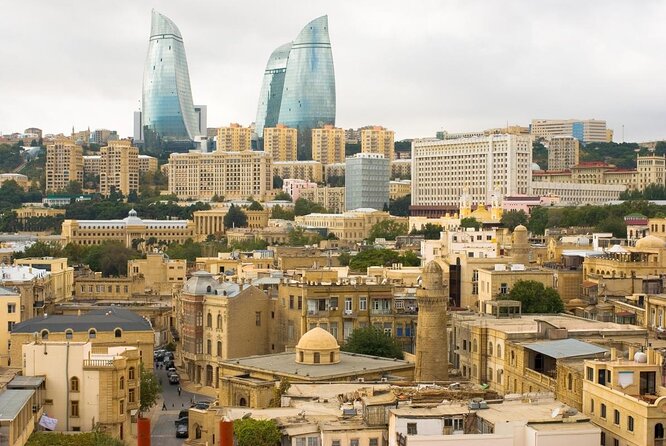
This is the kind of Baku tour that helps you get your bearings fast. You start in the walled Old City zone, then move through a chain of historic sites and famous landmarks around downtown and along the water. In a short window, you see how the medieval quarter, the oil-era buildings, and the modern promenade all sit in the same city.
The best part is the way the stops build on each other. You begin with symbols of Baku, then switch to buildings tied to specific eras, then end with the kind of views people actually use for planning their next day. And because it is a private tour, you stay with your group and do not get shuffled around by a big crowd.
Price and Timing, is $22.10 for 3 to 4 hours fair?
At $22.10 per person for about 3 to 4 hours, the value is mostly about how many major sights you touch, not about one expensive-ticket attraction. Several stops list admission included, and a couple are free outright, including Highland Park and the Palace of the Shirvanshahs.
Here is the practical way to think about it. Even if you end up paying a separate ticket for a couple of places, this route still stitches together multiple eras in one walk. That matters in Baku, because you can burn time crossing from one side of the city to another on your own. On this tour, the movement is already planned.
One note: the experience is described as needing good weather. If skies are stormy, plan for rescheduling or a refund option, depending on what the provider offers for that situation.
More Baku days worth putting side by side
- Baku: Gobustan, Mud Volcano, Fire Mount, Temple Lunch Entry
★ 4.9 · 3,246 reviews - Baku: Guba, Shahdag, Laza & Lunch w/ Free City & Night Tour
★ 4.8 · 1,455 reviews - BEST Gobustan, Volcanoes & Absheron Fire Tour (Group or Private)
★ 5.0 · 1,254 reviews
The Maiden Tower Start, and why it feels like Baku’s opening line
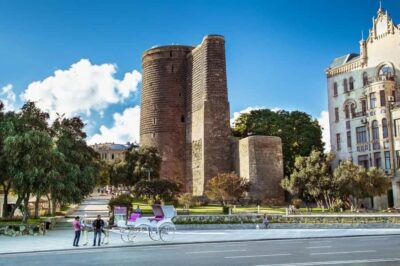
Your tour begins in the Old City atmosphere, where the Maiden Tower rises above the southern edge of the walled quarter. It is one of those places that looks like it has been there forever. The details add to the pull, since the origins are still wrapped in mystery: no surviving written sources record when it was built, what it was built for, or how it got the name Qiz qalasi, the Maiden Tower.
Expect a short stop, about 10 minutes. That is just enough time to take photos, notice the sea-side setting, and pick up the basics of why the tower is treated like a symbol. If you are the type who loves spending an hour in one spot, you will likely want to come back later. But as a first stop, it works well.
Admission for this stop is listed as not included, so budget for a ticket if you want to go inside, if access is available at the time you visit.
Palace of Happiness, a Valentine story built by oil-era money
Next up is the Palace of Happiness, tied to the millionaire Muxtarov. The story is specific, and that helps it land. He supposedly built it as a surprise Valentine gift for his second wife, and the building was constructed as a copy after she admired a similar home she saw during a grand tour in Italy.
The human angle matters here. This is not just architecture, it is a whole relationship in building form. It also connects to the oil-era backdrop, since Muxtarov went from lowly origins to becoming a major supplier supporting the oil industry. If you like your history with characters attached, this stop delivers.
Admission for this stop is listed as included, and the time is about 10 minutes. You are not here to tour a full estate at a slow pace. You are here to understand what you are looking at and move on with that context.
Taghiyev School for Girls, the first European-style parliament in the Muslim world
One of the most interesting pivots in this route is the former Taghiyev School for Girls, now connected to the Institute of Manuscripts of Azerbaijan. The building is described with a timeline that jumps across political worlds.
From September 1901 until March 1918, it served as the Empress Alexandra Russian Muslim Boarding School for Girls. Then, after a sharp change in power and ideas, Taghiyev gave the building to the Parliament of the first Democratic Republic of Azerbaijan. The claim in the provided details is that it was the first European-style parliament in the Muslim world, and that it functioned until the fledgling republic collapsed about 23 months later, with the Bolsheviks invading Azerbaijan in April 1920.
This stop runs about 15 minutes. That is enough time to grasp the big shifts and connect them to a real place you can point to later. Admission is listed as included for this stop.
A different direction from Baku:
- Gobustan and Absheron tour (All inclusive)
★ 5.0 · 1,014 reviews - Shamakhi And Gabala Tour (All inclusive)
★ 5.0 · 815 reviews - From Baku: Gabala and Shamakhi Tour (Free Baku City Tour)
★ 4.8 · 695 reviews - Baku: Candy Cane, Guba, Khinaliq village with Homemade Lunch
★ 4.9 · 519 reviews
Museum of Miniature Books, small format, serious collection
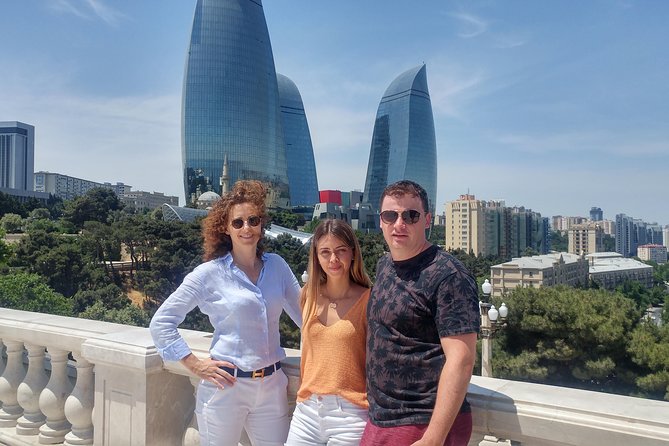
Then you get a totally different kind of cultural stop: the Museum of Miniature Books. It is described as the only museum of miniature books in the world, started on April 2, 2002, and placed in the old part of Baku, called the Inner City.
The scale here is the fun part. The collection was gathered by Tahir Salahov’s sister, Zarifa Salahova, over 30 years. The details say more than 6,500 miniature books from 64 countries. It even includes miniature publications from post-revolutionary Russia and Soviet periods, plus books from countries like Moldova, Georgia, Ukraine, Belarus, and republics across the Middle East and Europe region.
The museum also highlights rare editions, including works by Chukovsky, Barto, Gogol, Dostoyevsky, and A. S. Pushkin.
This stop runs about 20 minutes. If you are short on time in Baku, this is a great choice because it teaches you something you cannot easily pick up from guidebooks, and it is not physically demanding.
Admission is listed as included.
Muhammad Mosque, Siniggala, and the Russo-Persian War story
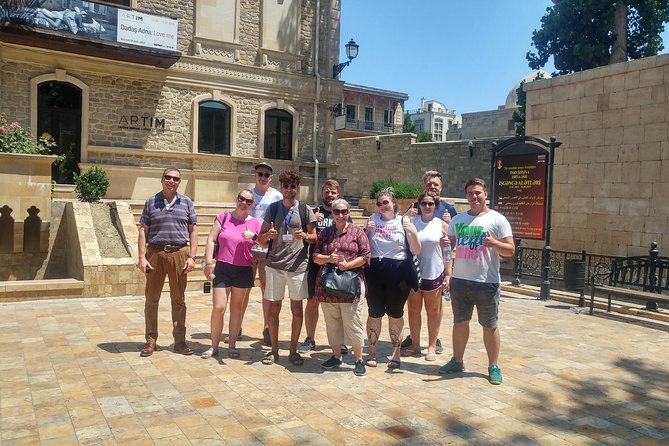
Your tour continues with the Muhammad Mosque, also called Siniggala Mosque. The details place it in the 11th century in the Old City, and it is nicknamed Siniggala because of the damaged-tower minaret, Siniggala.
Then the story gets dramatic. The mosque picked up its second name in 1723. A Russian military squadron approached the city from the seaside during the Russo-Persian War, demanded surrender, and bombing began after refusal. One shell hit the minaret of Muhammad Mosque and damaged it. A stormy wind then blew the warships further out, and the population interpreted the wind as a divine sign.
Expect about 10 minutes here. This is a quick history stop more than a slow worship-space visit. Admission is listed as included.
Inside Baku’s Old City walls, UNESCO in plain sight
After mosques and stories, you get the zone that ties it all together: Baku Old City, also called Inner City, İçərişəhər. You will walk through the historic core surrounded by walls designed for defense. The details also point out UNESCO recognition: in December 2000, the Old City of Baku, including the Palace of the Shirvanshahs and Maiden Tower, became the first location in Azerbaijan classified as a World Heritage Site by UNESCO.
Time here is the longest in the Old City segment, about 40 minutes. That is intentional. It is the time to actually feel the scale of the quarter, notice the tight street patterns, and understand why the area has stayed central to Baku identity.
Admission for this stop is listed as included.
Fountains Square, people-watching with a Soviet-era backbone
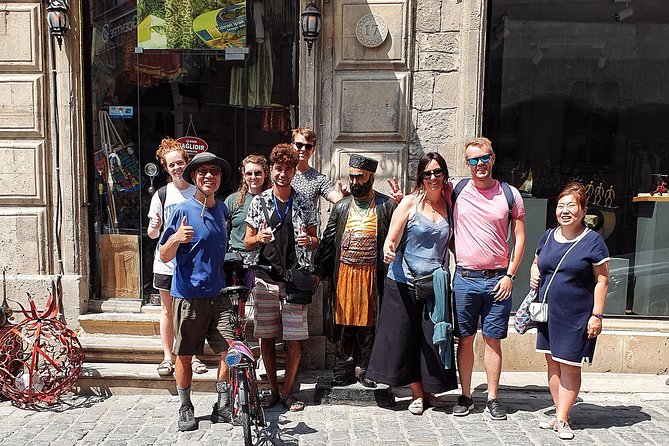
Now you transition to downtown life at Fountains Square. The details say the square used to be called Parapet, and its current name comes from dozens of fountains first constructed during Soviet rule. This is a public meeting point after business hours and on weekends, packed with shops, boutiques, hotels, restaurants, and places to pause.
Time here is about the short, realistic kind of stop, enough for a breather and some orientation. You are walking through a city, not just viewing a museum. I like this kind of stop because it keeps the tour from turning into a checklist of stones.
Admission is not mentioned here as a paid entry, since it is a public square.
St. Gregory the Illuminator’s Church, a reminder of how cities change
You also stop at the Armenian Church of Baku, St. Gregory the Illuminator’s Church. Built in 1887, it survived Sovietization differently than many other religious buildings, and the provided details say it was the only Armenian church in the Soviet Union that was not demolished during the 1920s and 1930s.
Then the later decades hit. During the late 1980s and early 1990s conflict between Armenia and Azerbaijan, the church was closed down and damaged in 1990 during the deportation and exodus of the Armenian population from Azerbaijan. The key practical point: it is no longer open to the public.
This is listed as a 10-minute stop, and admission is listed as not included. Even if you cannot enter, it is a place that forces you to notice how layers of history can remain in a city street grid.
Baku City Executive Power, baroque detail and a fire-symbol emblem
Next is the Executive Power of Baku City headquarters at 4, Istiglaliyet Street. The building construction is described as starting in 1900 and finishing in 1904. The architectural details are very specific: Polish architect I. Goslavski used a baroque style and classic construction methods, and this was his last work.
The facade is described as decorated with red brick imported from Italy and colored marble. The emblem in the central facade is also explained: three golden torches symbolize Azerbaijan as the land of fire.
Time is about 10 minutes. This is where your guide’s job matters. The building looks impressive even without extra explanation, but with context you start seeing symbolism instead of just repeating surface impressions.
Admission is listed as included for this stop.
Juma Mosque, a site tied to fire worshipers and later conversion
The route includes the Juma Mosque in the Icheri-sheher. This stop is described as functioning since the 12th century, and it states the mosque was built in 1899 with funds from Baku philanthropist Khadja Shikhali Dadashev.
The details then connect it to older sacred space. The mosque is said to have been built on the site of a temple of fire worshipers. Only four uncoated arches remained from the old building, and the text says modern archaeologists argue that there was a pagan sacred center on the site where fire worshipers gathered.
Then, in the 14th century, the pagan temple was converted into a mosque, with an inscription referencing an order by Amir Sharaf al-Din Mahmud in Rajab, year 709 Hijri, described as 1309.
Because the provided info does not specify ticket inclusion for this stop, treat it as a question to confirm when you book.
Baku Boulevard, the long Caspian promenade you can use any day
After Old City concentration, you move toward the water with Baku Boulevard. The details describe it as a promenade established in 1909, running parallel to Baku’s seafront, with a history going back more than 100 years to oil barons building mansions along the Caspian shore. The seafront itself is described as artificially built up inch by inch.
Size details are included: about 3 km and 750 m, from National Flag Square to Freedom Square. The text also mentions a planned expansion to 26 km, including Bibiheybet and Bay of Baku by 2015.
In the route timing, this stop is about 15 minutes. It is not a long promenade day. It is more a structured way to reset your senses, grab photos, and connect what you just saw inland to the bay view outside.
The tricky part is that the information lists admission as included for one boulevard segment, and free for another boulevard segment later. Since both segments are boulevard, and boulevards are usually open public space, I would treat it as likely free, but I would not bet your plans on that without checking the final voucher details.
Philharmonic Hall, Monte-Carlo-inspired architecture with a local music purpose
You also pass the Azerbaijan State Philharmonic Hall, built 1910 to 1912 at the request of the city elite. The building is described as designed by Armenian architect Gabriel Ter-Mikelov, with an Italian Renaissance exterior and German Rococo interior.
The inspiration mentioned is specific: the design was inspired by the architectural style of buildings within the Monte-Carlo Casino. The hall’s early life is also tied to social history. It was originally organized as a club for wealthy residents, known as the Summer Center for Public Gatherings before 1936. During the Russian Civil War, it served as a place for public rallies. Then in 1936 it was reorganized into a residence for the Philharmonic society aimed at promoting Azerbaijani classical and folk music.
This is a short look, about 10 minutes in the route. Still, I think it is worth it, because you get a sense of the city’s cosmopolitan ambitions without leaving Baku.
Palace of the Shirvanshahs, free entry and restored courtyards
One of the best value moments on this tour is the Palace of the Shirvanshahs. It is described as a palace complex consisting of nine buildings, recently restored. You will walk through pavilions, courtyards, palace rooms, the crypt, cistern, and the Turskih bathhouses, plus a mosque. The idea is you get a real feel for everyday life inside the palace walls.
Time here is about 20 minutes. Admission is listed as free.
This stop works well in the middle of the route because it ties back to everything that came before. You saw the tower and mosques, then you see a palace complex that shows how power and culture were organized in the same Old City space.
Highland Park, the view stop that beats guessing where to go
Toward the end, you hit Highland Park, also known as Upland Park, Baku’s highest point in the city. The provided details say it offers a panoramic view of the city and bay. Locals and visitors go there for bird-eye perspective, and it is a common goal for people visiting for events too.
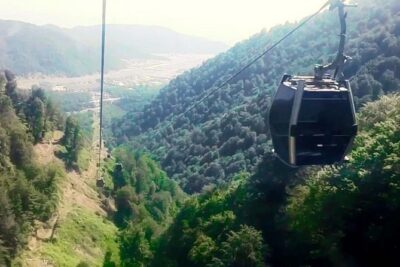
How you get there matters. The text says the Upland Park can be reached by cable railway, a funicular, in 7 to 8 minutes from the boulevard, or by climbing endless stone stairs. The suggestion offered is that it is better to enter the park from the square at the top, which includes the country’s parliament, the alley of martyrs, and the world-famous symbol of modern Baku called the Flame Towers.
Time here is about 30 minutes. Admission is listed as free.
This is your chance to slow down. Even if you only do one panoramic viewpoint in Baku, make it this kind. It helps you understand the bay, the coastline shape, and how modern Baku stacks above the Old City.
Walking pace, weather, and how to make the 3 to 4 hours work
The tour is designed for a moderate fitness level. That does not mean it is extreme, but you are on foot through an area with historic streets and you might be climbing, especially if you choose stairs to reach views. The route also needs good weather, which is common for walking tours.
My practical advice is simple:
- Wear comfortable shoes you can trust for uneven old surfaces.
- Bring a layer. Wind off the Caspian can change your comfort fast.
- If you care most about photos, tell your guide at the start so you can manage time at each stop, especially the Old City and the palace complex.
Also, because the schedule compresses many major points into a half day, your experience will depend on how your guide balances storytelling with actual viewing time.
Should you book the Best Baku City Tour?
I would book it if you want an efficient first look that still feels cultural, not just sightseeing. The mix of Icheri Sheher landmarks, the miniature books museum, palace interiors, and the bay promenade plus Highland Park viewpoints is a smart combo for first-timers. At $22.10, it is the kind of deal where your money goes toward time saved and context added, not toward one single ticket.
I would hesitate if you hate structured pacing. The route is built to fit many places into a short window, so if your style is to stay put for a long time, you may want a more flexible format or plan a follow-up day to revisit the spots you love most.
If you like guided walking, clear place-based stories, and you want a route that helps you understand Baku quickly, this is a solid choice.
FAQ
How long does this Baku city tour take?
The tour is listed as lasting about 3 to 4 hours.
How much does the tour cost per person?
The price is $22.10 per person.
Where does the tour start and end?
It starts at Icherisheher, Baku, Azerbaijan and ends back at the meeting point.
Is this tour private?
Yes. It is a private tour or activity, meaning only your group participates.
What ticket format do I receive?
You get a mobile ticket.
Are admission tickets included for the Maiden Tower?
No. The Maiden Tower stop lists admission ticket not included.
Are admission tickets included for the Palace of the Shirvanshahs and Highland Park?
Yes for your pocketbook. The Palace of the Shirvanshahs is listed as free, and Highland Park is also listed as free.
Is the Armenian Church of Baku open to the public on the tour?
The provided details say it is no longer open to the public, and admission for that stop is listed as not included.
Is the tour suitable for people with limited mobility?
The tour says travelers should have moderate physical fitness level.
What is the cancellation and weather situation?
Free cancellation is available up to 24 hours in advance for a full refund. The experience requires good weather, so if it is canceled due to poor weather, you are offered a different date or a full refund.
Are service animals allowed?
Yes, service animals are allowed.
Latest Baku reviews
- Gobustan Magic of Mud Volcanoes and Ancient Petroglyphs★ 5.0 · 3 reviews
- Gobustan Tour and Mad Volcanoes – tour to stone age★ 5.0 · 3 reviews
- Gobustan & Mud Volcano★ 4.5 · 3 reviews
- A Full Day Adventure: Khinalug, Guba & Candy Mountains Tour★ 5.0 · 3 reviews
- All destinations included Baku city tour for 1 day★ 5.0 · 3 reviews
- A Private Day Trip to Shahdag Ski Resort★ 5.0 · 3 reviews
- Small-Group Day Trip to Gobustan, Mud Volcanoes, Ateshgah & Yanar Dagh★ 4.5 · 3 reviews
- Private Sheki Tour – Four Regions of Azerbaijan in one day★ 5.0 · 3 reviews
City Tours, compared.
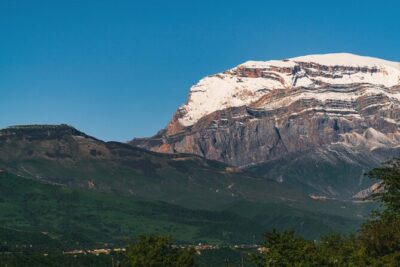
Guba, Shahdag, Laza & Lunch w/ Free City & Night Tour
Read our review →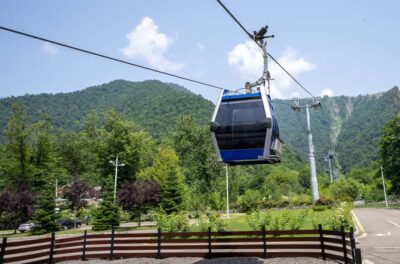
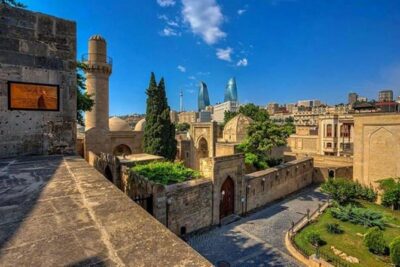
Stunning Walking Tour of Historical and Modern City
Read our review →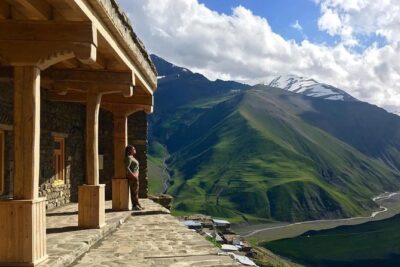
Guba Khinalug & Candy Cane Mountains tour (by Old City Tours)
Read our review →
Browse the lists this tour appears in