
Reviewed · GOBUSTAN NATIONAL PARK
Gobustan and Absheron tour (All inclusive)
Gobustan and Absheron in one day is interesting because it stacks two very different kinds of wonder: mud volcano craters that look like another planet, and the burning flames of Yanardag fed by natural fires. You also get a strong cultural thread running through the whole trip, from prehistoric rock art to Absheron’s fire-worship stories.
Two things I really like here are the tight lineup of major stops and the fact that costs are bundled. You are not scrambling for tickets and lunch mid-day, and the small group size (up to 17 people) makes it feel more like guided sightseeing than a bus-and-pray day.
One possible drawback to consider is pacing. It is a long day with a lot packed in, so if you want extra time sitting and staring at the mud volcanoes or taking slow photos, you might wish for a bit more breathing room.
Key things that make this tour worth your time
- Mud volcanoes with an off-road feel, plus the chance to see why locals tell spooky stories about the place
- Gobustan open-air museum and petroglyphs, with a museum intro that sets context fast
- Ateshgah Fire Temple, tied to the Great Silk Road era and beliefs around natural flames
- Yanardag Burning Mountain, where the fire has kept going for centuries and you get wide peninsula views from the top
- Lunch and admissions included, so the $85 price is easier to judge on the spot
One long day that actually connects the dots
This is a full-day circuit from Baku, aimed at the Absheron peninsula and the Gobustan area south of the city. The route is not random. It is built like a storyline, moving from geology (mud volcanoes) to deep time (rock art) to human meaning (temples and fire sites), and ending with big views.
The tour runs about 8 to 9 hours, though in real life it can run closer to 10 depending on how the day flows. That is a lot of sitting on the road, but the upside is you get a lot of Azerbaijan in one go without needing to rent a car or coordinate multiple tickets.
Also, it is priced at $85 per person and usually gets booked a bit ahead, around 23 days on average. If you are traveling in busy season, that is a sign to lock it in early rather than waiting for the last minute.
More of the Absheron peninsula:
- BEST Gobustan, Volcanoes & Absheron Fire Tour (Group or Private)
★ 5.0 · 1,254 reviews - Baku: Gobustan Absheron Tour Entry Tickets included
★ 4.9 · 329 reviews - Baku: Gobustan-Absheron Tour with Hotel PICK UP and DROP OFF
★ 4.8 · 170 reviews
The Gobustan mud volcanoes, why they feel otherworldly
You start with the drive about 70 km south of Baku and then head into the Gobustan desert area. The mud volcanoes here are not the smooth, movie-style volcano you might picture. Instead, you are dealing with active craters and blue clay that turns the ground into something lunar and surreal.
There is also a fun layer of folklore. You will hear the local legend that djinn live in these places. Whether you take the story literally or not, it helps you pay attention to what you are looking at. Mud craters plus a guide with a good delivery can turn a quick stop into a memorable one.
Timing is the key question. The tour schedule gives you about 1 hour at the mud volcanoes complex. For some people, that feels perfect. For others, it can feel like you spend more time moving between viewpoints than standing in one spot. If this is your number-one priority, I’d go in with the mindset that you will want to be ready to walk quickly, not linger for long.
One practical note from the off-road style of this day: you should expect bumpy approaches to the sites. Some days involve older vehicle styles for the off-road run to the area around the craters. That can be part of the fun if you like action. If you get carsick easily, consider bringing what you normally use for long, rough rides.
Gobustan National Reserve: museum first, then petroglyphs
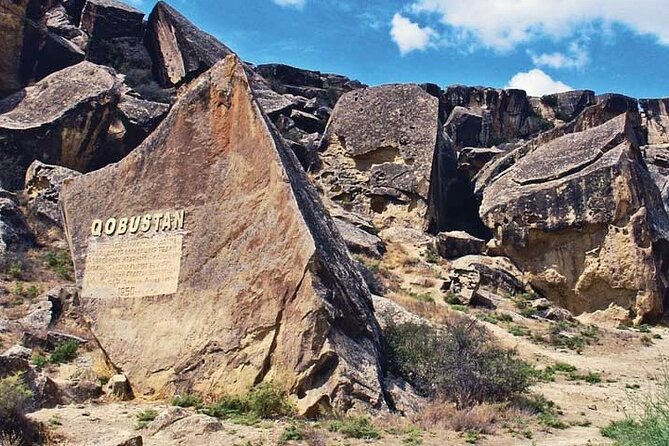
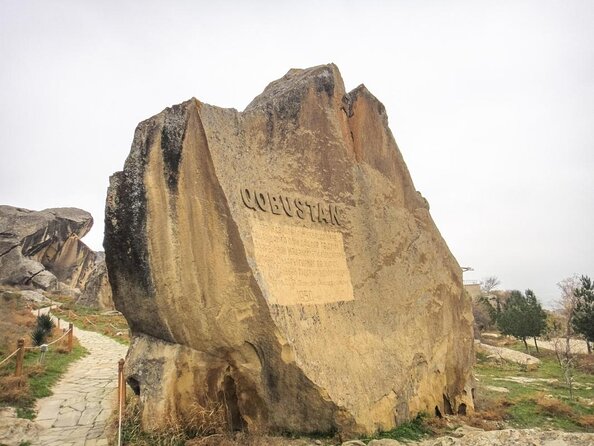
Gobustan is the part of the day where the scenery gives way to evidence. The stop includes two main elements: a museum-exposition intro and then time for the rock art itself.
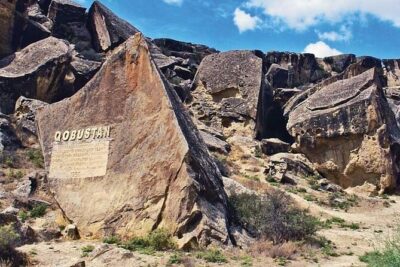
What I like about doing the museum first is that it makes the outdoor walking easier to understand. You get an overview of prehistoric life in the region, before you are surrounded by petroglyphs. It helps you read the rock art instead of just collecting photos.
Then you move onto the open-air rock art area along an excursion trail. You are walking in the presence of images left by early humans, with the Caspian Sea coast nearby. The guide’s explanations matter here. If you pay attention for even a small chunk of the story, you start to see how the harsh environment shaped daily life and community structure.
Also, the tour includes admission for the open-air museum and related natural history exhibition access. That matters because it keeps you from having to juggle ticket buying while you are standing in a place that demands your eyes.
A balanced heads-up: if your tastes run more toward dramatic geology than slow outdoor archaeology, you may find this part more “walk and listen” than “spectacle.” Still, it is one of the most meaningful stops in the itinerary because it gives the day a backbone.
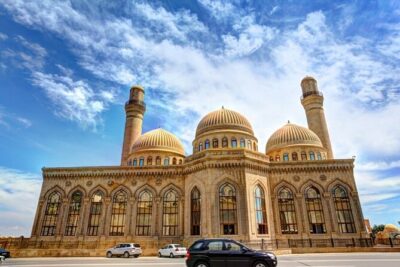
Bibi Heybat Mosque on the way back, a quick hit with great context
On the return leg, the tour includes a stop at the Bibi-Heybat Mosque. This one is from the 13th century, built by Shirvanshah Abu-l-Fath Farrukhzad. It is a classic kind of architectural stop, not huge and not meant to take over the entire day, but it adds a real cultural anchor.
The highlights here are visual and practical. The interior is noted for colorfulness, and the facade stretches upward in a way that is good for both quick observation and photos. You also get a side benefit: views toward the Caspian Sea and the cargo port cranes nearby.
Because it is on the way back from Gobustan, it fits well into the rhythm of the day. It also breaks up the long drive, so you do not end the trip feeling like it is one long ride followed by dinner.
Other trips into the Gobustan reserve:
- Baku: Gobustan, Mud Volcano, Fire Mount, Temple Lunch Entry
★ 4.9 · 3,246 reviews - Baku: Gobustan, Volcanoes, Fire Temple and Yanardag Day Trip
★ 4.7 · 433 reviews - Gobustan & Mud, Fire Temple, Burning Mountain (Group & Private)
★ 4.5 · 418 reviews - Gobustan-Mud Volcan-Fire Temple and Mountain Tour/Entrance inc
★ 5.0 · 267 reviews
Narimanov lunch in the middle of the circuit
Lunch is served around Narimanov, at a restaurant stop in a central park area. This is where the tour package is strongest on paper: lunch is included, and the included set menu is specific.
You can expect a three-course style meal with:
- 2 qutabs (one with greenery stuffing, one with meat stuffing)
- assorted kebab (chicken, lamb, lula-kebab)
- pilaf
- choban salad
- ayran or coke, plus tea
In real-world terms, this can be excellent value because it removes a common headache. Without an included lunch, you would likely spend time finding a place, ordering, paying, and then trying to be back on schedule.
Still, lunch is also where you might feel the variability of group travel. Some people say the meal was great and plentiful. Others have said lunch was disappointing or rushed by the restaurant flow. I can’t promise how every day will feel, but I can tell you this: if you are picky about food quality or you hate being rushed during meals, plan to manage expectations. Eat first, ask for what you need, and do not wait for perfect timing.
Ateshgah Fire Temple: the story of flames and the Silk Road era
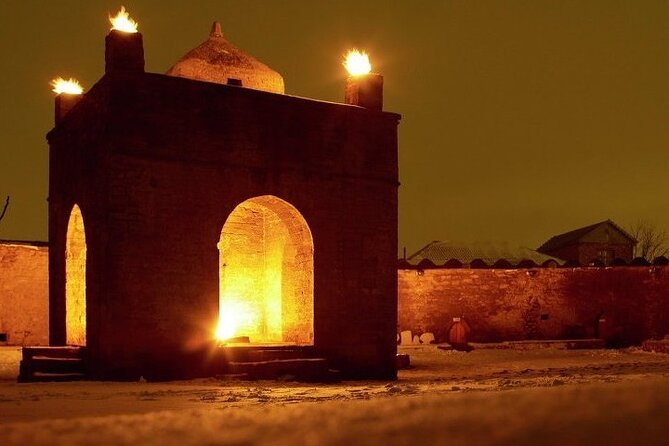
After lunch, the tour shifts from Gobustan into Absheron’s fire sites. The main stop is Ateshgah, the Temple of Fire Worshippers, in Surakhany Village.
This place is built on a simple hook: natural flames bursting from the ground. The story ties together Hindu Brahmanites and Persian Zoroastrians who came to the area because of those fires. Even if you only take the historical angle at face value, it is a clear example of how geography shapes belief.
The Great Silk Road connection is part of why this site is more than just a temple stop. The route brought traveling merchants through the region, and the area is described as having a caravanserai, an inn for those merchants. That means your guide can connect the fire worship setting to movement, trade, and everyday life around it.
The tour includes admission for the Fire Temple, and you get time with guided explanations plus installations that help illustrate beliefs and day-to-day life of fire-worshipping hermits and nearby neighbors.
Practical takeaway: this is the stop where you will learn the most about “why fire mattered” in this part of the world. If you want pure visual drama, you might find other stops more eye-catching. If you want meaning, this is the one.
Yanardag Burning Mountain: the final flames and the big views
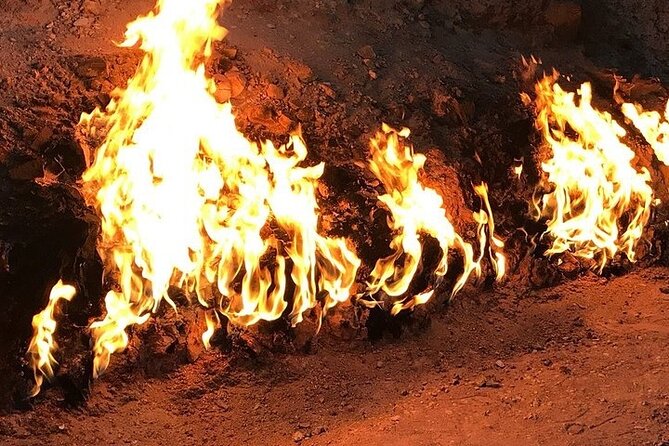
Yanardag, also called the Burning Mountain, is the end-of-day payoff for many people. The story is simple and specific: out of several dozen burning places on Absheron, only one is said to have survived to modern times. The fire has been beating from the ground for many centuries.
The name Yanardag translates as Burning in Azerbaijani, so it’s hard to miss what you are going there to see. You are not touring a museum exhibit about fire. You are standing near an ongoing natural flame, and the guided talk helps you understand why this site became famous in regional tradition.
Then comes the view. From the observation deck near the top, you get a wide look at about a third of the Absheron peninsula. That matters for two reasons. First, you can visually connect earlier stops into one geography. Second, it gives you a reason to slow down for a moment before the ride back to Baku.
If you are a photo person, this is your best chance late in the day for a dramatic “proof shot.” If the day has been rushed so far, this stop is often where it starts to feel worth it.
Guides and small group size: why it can feel personal
This tour is run in a small group, with a maximum of 17 travelers, and guides work in two languages, English and Russian. The difference a good guide makes is obvious on an itinerary like this, because the value depends on how well they connect what you are seeing.
From guide feedback in the wild, I’d put extra attention on the names that kept popping up in strong experiences, like Sayid, Zeyneb, Vusala, Nazperi, Fidah, and Seyidağa. When a guide is animated and explains the “why,” the stops feel more like a story than a checklist.
It also helps that the tour includes admissions and lunch. When costs are handled, the guide has more freedom to focus on timing and explanation instead of chasing receipts and ticket lines.
Price and value: what $85 actually buys you
At $85 per person, this tour is priced for a full circuit with several paid entries. What you are really paying for is convenience plus included admissions.
Included items cover:
- air-conditioned vehicle
- professional guide services in English and Russian
- facility and landing fees
- transfers (round-trip as described)
- tickets for mud volcanoes complex, open-air museum, fire temple, Yanardag, and natural history exhibition
- lunch plus drinks and tea
When you price this kind of day yourself, the admissions alone can add up fast. Add lunch and the hassle factor drops. That is where this $85 feels fair, especially if you want to avoid the “ticket scramble” that ruins the flow of a day.
Where value can drop is when the schedule is tight for your preferences. The itinerary is structured with about 1 hour at the mud volcanoes, about 1 hour at the museum component, and another hour for the petroglyph rock art segment. If you love one stop and want longer time there, you might feel you are paying for variety more than depth.
How to get the most out of the schedule
Here’s how I’d handle a day like this so you leave happy, not tired.
First, treat it as a “see the big things” day, not a “sit for hours” day. You will be moving between stops with guided interpretation along the way.
Second, bring the basics for a long outdoor day. Even with an air-conditioned vehicle, you spend real time outside at Gobustan and later at Yanardag. Comfortable shoes matter. Water helps. If you get carsick on bumpy rides, pack what you normally rely on.
Third, ask your guide early about timing priorities. The day can feel smooth when you know how long each stop really is. If mud volcanoes are your top target, confirm that you will have enough time for photos and crater viewpoints. If petroglyphs are your focus, plan to stay on the trail instead of drifting.
Finally, be ready for a cultural rhythm shift. The trip goes from geology to prehistoric art to religious sites. You get the best experience when you do not rush your brain between themes. Take a minute at each stop to reset, even if the group pace is quick.
Should you book the Gobustan and Absheron all-inclusive tour?
Book it if you want a practical, one-day hit list that covers mud volcanoes, prehistoric rock art, a fire temple, and Yanardag flames, all with admissions and lunch included. The small group size and bilingual guiding make it easier to follow the story.
I would think twice if you know you need long, slow time at one attraction, especially the mud volcano craters. This itinerary is built for coverage, not extended lingering. Also, lunch seems to vary in how people rate it, so if your food standards are strict, keep your expectations realistic.
If you want an efficient, culture-forward day in the Absheron area without logistics headaches, this is a strong option. Just go in knowing it is a full day with lots of stops, and the payoff will match your effort.
FAQ
How long is the Gobustan and Absheron tour from Baku?
The tour runs about 8 to 9 hours.
What does the price include?
The package includes air-conditioned transportation, a professional guide in English and Russian, facility and landing fees, tickets for the main sites (mud volcanoes, open-air museum, fire temple, Yanardag, natural history exhibition), and lunch.
Is lunch included?
Yes. Lunch includes qutabs, assorted kebab, pilaf, choban salad, ayran or coke, and tea.
What sites will we visit in the Gobustan and Absheron area?
You’ll visit the mud volcanoes complex, Gobustan National Reserve museum and petroglyph area, Bibi-Heybat Mosque on the return route, Ateshgah Fire Temple, and Yanardag (Burning Mountain).
How big is the group?
The maximum group size is 17 travelers.
Where do we meet in Baku?
The tour starts at 1 Azərbaycan Prospekti, Bakı 1005, Azerbaijan, and ends back at the meeting point.
Do I get a ticket on my phone?
Yes, the tour includes a mobile ticket.
Is there free cancellation?
Yes. You can cancel up to 24 hours in advance for a full refund.
Latest Baku reviews
- Gobustan Magic of Mud Volcanoes and Ancient Petroglyphs★ 5.0 · 3 reviews
- Gobustan Tour and Mad Volcanoes – tour to stone age★ 5.0 · 3 reviews
- Gobustan & Mud Volcano★ 4.5 · 3 reviews
- A Full Day Adventure: Khinalug, Guba & Candy Mountains Tour★ 5.0 · 3 reviews
- All destinations included Baku city tour for 1 day★ 5.0 · 3 reviews
- A Private Day Trip to Shahdag Ski Resort★ 5.0 · 3 reviews
- Small-Group Day Trip to Gobustan, Mud Volcanoes, Ateshgah & Yanar Dagh★ 4.5 · 3 reviews
- Private Sheki Tour – Four Regions of Azerbaijan in one day★ 5.0 · 3 reviews
Gobustan National Park, compared.
Gobustan, Mud Volcano, Fire Mount, Temple Lunch Entry
Read our review →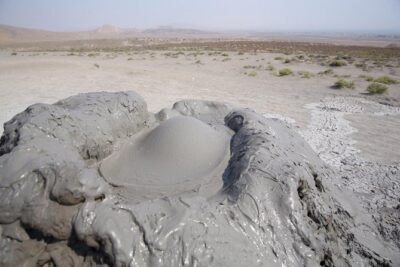
BEST Gobustan, Volcanoes & Absheron Fire Tour (Group or Private)
Read our review →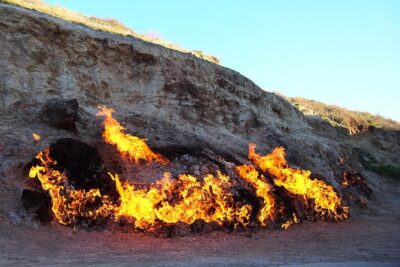
Gobustan, Volcanoes, Fire Temple and Yanardag Day Trip
Read our review →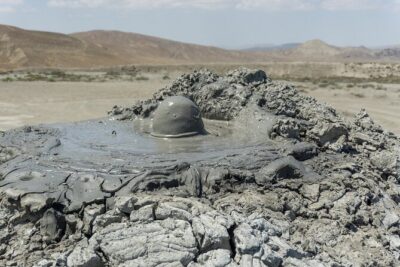
Gobustan & Mud, Fire Temple, Burning Mountain (Group & Private)
Read our review →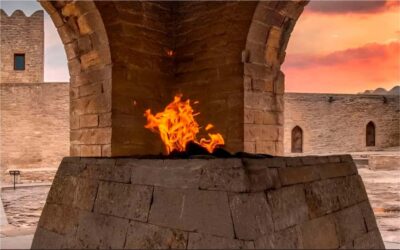
Mud Volcan-Fire Temple and Mountain Tour/Entrance inc
Read our review →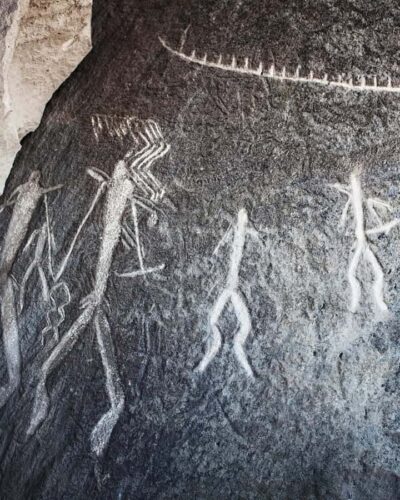
Gobustan Mud Volcanoes Temple & Entry tickets included
Read our review →
Gobustan-Absheron Tour with Hotel PICK UP and DROP OFF
Read our review →Browse the lists this tour appears in