
Reviewed · BAKU OLD CITY
Guided Old City Tour on Baku’s Timeless Charm
Baku’s Old City is one of those places where the streets feel built for slow wandering, so a guided walk makes a big difference. In about 2 hours, you get a clean route through Icherisheher, with real context for what you’re seeing and why it mattered.
I especially like that the tour keeps the pace tight but not rushed, with stops that range from the big UNESCO landmarks to smaller, overlooked corners. I also love that a guide named Vahid shares stories in a way that makes the sights feel connected, not like a checklist. The group stays small, so you get personal attention.
One thing to consider: not every major monument has the admission included. In particular, Maiden Tower and the Palace of the Shirvanshahs require separate entry, so you may want a little extra budget for tickets.
Key highlights you should know before you go
- Small-group feel with a maximum of 15 travelers, so questions and photo stops are easier to manage
- A tightly planned 2-hour loop through Icherisheher’s gates, caravanserais, mosques, churches, and baths
- UNESCO monuments included in the route, plus quick stops at nearby historic complexes
- Most entries are free, but Maiden Tower and the Shirvanshahs Palace have admission not included
- Practical local stops, including time at the miniature book museum and an artist workshop
- A guide-led story thread that connects trade, religion, and daily life across centuries
Why Baku’s Old City feels different with a guide
I get why people do the Old City on their own. The streets are charming, the stone is photogenic, and you can drift at your own pace. But I also think the Old City works best with a guide when you want to understand the “why” behind the shapes, names, and locations.
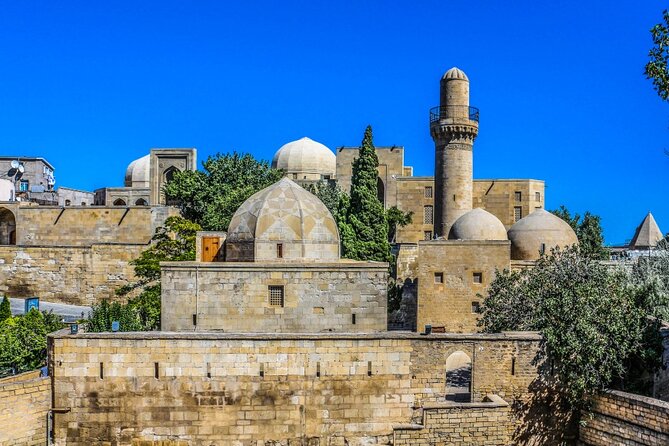
This tour is built around Icherisheher, Baku’s historic core, where the architecture tells layered stories. You’ll move past fortification gates, merchant buildings, religious sites from different eras, and bathhouses that show how daily life ran behind the scenes. Without a guide, you can still enjoy the scenery, but it’s easy to miss the pattern.
The best part is the story connection. You don’t just hear random facts. You get a thread that links trade routes, the rise and fall of powers, and how people adapted their spaces over time. That’s exactly the kind of context that makes a short visit feel meaningful.
More of the walled Old City:
- Guba Khinalug & Candy Cane Mountains tour (by Old City Tours)
★ 4.5 · 208 reviews - Gabala + Shamakhi tour (by Old City Tours)
★ 4.5 · 198 reviews - Baku Walking Tour (Old City)
★ 5.0 · 127 reviews
Starting at Gosha Gala Square, then getting your bearings fast
Your tour starts back at the same meeting point at the end, making it simpler if you’re trying to time your day. You’ll meet at Gosha Gala Square, 47 Kichik Qala, Baku, Azerbaijan. The tour window runs 10:00 AM to 6:00 PM every day, and it operates across the date range listed for 10/17/2024 to 07/08/2026.
Since the tour lasts about 2 hours, the pacing matters. The route includes a mix of quick “spotlight stops” and a few longer viewing windows. You’ll see a lot of the Old City, but it’s not the kind of ride where you barely step out. Most stops are brief enough to keep momentum, yet long enough to look up, take photos, and understand what you’re seeing.
Also, the tour uses a mobile ticket, so you’re not hunting for paper vouchers in your bag. And because the max group size is 15, the guide can keep things orderly in the narrow lanes where crowds can get messy.
Gates and caravanserais: the trade map in stone
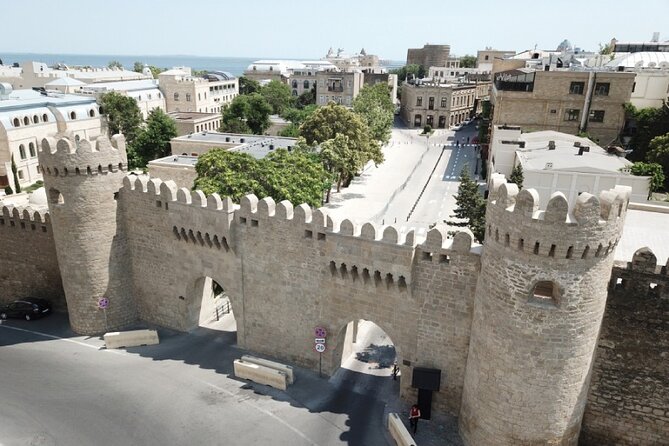
The tour opens with one of the most iconic Old City entrances, the Gosha Gala Tower and the Double Gates. This matters more than you might think. Fortification gates like this weren’t just decoration, they were part of the city’s defense and control. When you know that, the stonework feels less like a backdrop and more like a system.
Next you’ll hit the caravanserai circuit. Baku was shaped by merchants, and caravanserais were where travelers and goods paused, traded, and sheltered. You’ll spend short time at two key ones, the Bukhara Caravanserai and the Multani Caravanserai.
What I like about these stops is how they explain the building layout. You’ll hear about how the courtyard and surrounding rooms supported travel life. The Bukhara caravanserai, built at the end of the 15th century, is described as having an octagonal courtyard and perimeter balconies that helped form an open-air gathering area. For a visitor, that detail helps you “read” the building instead of just looking at it.
The Multani Caravanserai, established in the 14th century, ties the Old City to a wider world of long-distance trade. The key idea is that these spaces weren’t isolated. They were linked to routes and communities far beyond Baku.
A quick note: these caravanserai stops are short, so if you’re the type who loves to linger and sketch, bring your energy for a second visit later. Here, you’re getting a smart orientation and a few “clicks” of understanding.
Maiden Tower and UNESCO context: what to notice in 10 minutes
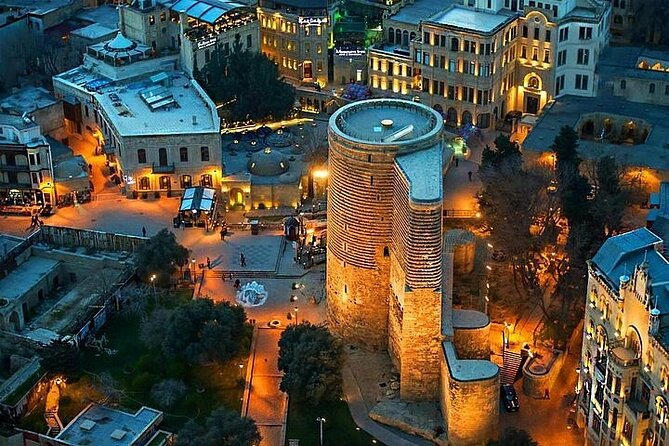
The Maiden Tower is the star most people recognize right away, and it’s also one of the places where context really boosts your experience. The guide frames it alongside the broader UNESCO group that includes the Shirvanshahs Palace. That matters because the monuments were listed together as an ensemble, not as separate random highlights.
You’ll have about 10 minutes here. That’s enough time to take a close look at the tower’s overall shape and surrounding setting, then move on with actual understanding instead of guessing.
One practical thing: the tour lists admission for Maiden Tower as not included, so expect an extra ticket cost if you want to go inside or fully access areas that require entry. If you’re budget-conscious, it’s worth checking what part is ticketed on the day of your visit.
Also, the tour connects Maiden Tower to older architectural and cultural theories. You’ll hear references to scientific sources about Zoroastrianism and pre-Islamic architecture in the broader region. Even if you don’t weigh theories the same way as the guide, it gives you a richer way to look at the tower rather than just admiring it.
More Baku days worth putting side by side
- Baku: Gobustan, Mud Volcano, Fire Mount, Temple Lunch Entry
★ 4.9 · 3,246 reviews - Baku: Guba, Shahdag, Laza & Lunch w/ Free City & Night Tour
★ 4.8 · 1,455 reviews - BEST Gobustan, Volcanoes & Absheron Fire Tour (Group or Private)
★ 5.0 · 1,254 reviews - Gobustan and Absheron tour (All inclusive)
★ 5.0 · 1,014 reviews
Bazar, Khanqah complex, and the Friday Mosque area
After the tower zone, you shift into the feel of everyday Old City energy. You’ll get time at the Baku Old City bazar square, also connected with the Khanqah complex dating to the 12th and 13th centuries. This is where arcade architecture shows up, and the guide helps you understand why these areas mattered for religious and social life.
Then comes Juma Mosque, known as the Friday Mosque. The guide shares that an inscription records restoration ordered by Amir Sharaf al-Din Mahmud in Rajab 709 A.H. (1309), and you’ll hear about a minaret erected later, supported by stalactites.
But don’t worry if you can’t track every date. The more useful idea is that the mosque you see now is shaped by rebuilding over time, including later construction in 1899. You also get a note that traces of a Zoroastrian temple are believed to be at the site. That’s the kind of layered continuity that makes Icherisheher different from many Old Towns that feel more “single era.”
The mosque stop is about 5 minutes. That’s short, but if you look for how the space sits in relation to the streets and the other monuments, you’ll start seeing the whole neighborhood as a map of faith and power.
St. Bartholomew Church: a different faith on the same stones
I like that the tour doesn’t only focus on one religious tradition. You’ll stop at St. Bartholomew Church, built in 1892 on the site where the apostle Bartholomew was believed to have been killed in the early 1st century.
This is a small chapel-shaped Orthodox church, and you’ll get a quick explanation of its foundation on older church sites. The tour also notes it operated until 1936, then was demolished during an anti-religion campaign.
For many visitors, this is the moment that clarifies how Baku’s historic core held more than one worldview side by side. It’s not about agreeing with the stories. It’s about understanding that the stones kept being re-used by new communities.
You’ll have about 3 minutes here. Again, it’s a quick stop, but it adds depth and balance to the overall walk.
Bathhouses: where daily life gets architectural
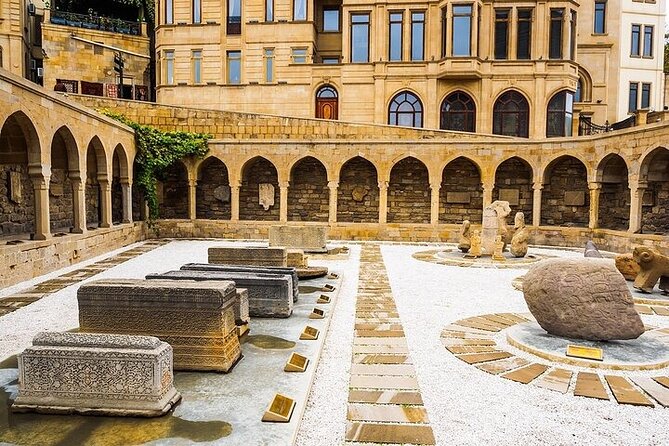
The Old City’s bathhouses might sound like a niche stop, but they’re actually one of the best ways to understand how people lived. On this route, you’ll see multiple bath-related monuments.
First, you’ll visit an underground medieval bath discovered during archaeological work in 1964, built in the late 15th century and connected to the patron names Haji Ghayib and Haji Bani. The point the guide makes is how the architectural forms create a sense of volume even in small cells. It’s a good reminder that these were designed spaces, not just plumbing.
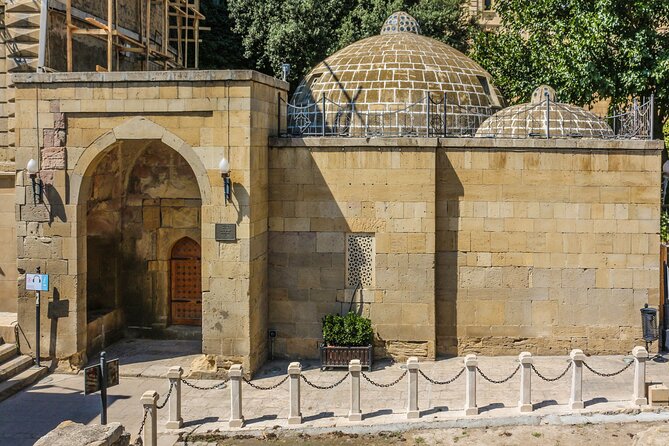
Then you’ll move to the Gasim bey Bath, also known as the Sweet Bath. The tour connects the name to sweets served to bathers with tea. You’ll hear about the layout elements such as entrance halls, cloakrooms, baths, swimming pools, and boiler-house components. There’s also a note about cross-shaped domes in dressing areas and swimming pools, plus the reconstruction in 1970 and its later use as the “Green Pharmacy.”
Finally, you’ll reach Aga Mikayil Bath House, built in the 18th century. This one is described as still functioning after restoration work in 2010, and you’ll learn about its pointed arches and domes.
Here’s the practical value: bathhouses help you picture daily routines. They also make the Old City feel human, not just monumental. In a 2-hour tour, it’s one of the strongest “wow, that’s how people lived” moments.
Caravanserais and towers: defensive architecture you can feel
You’ll also stop at a historic building tied to merchant lodging, the Gasim bey caravansary from the 15th century. The route treats it as part of the same larger commercial system that shaped the Old City. There’s also another “small caravanserai” stop, described as a 12th-century structure with a square shape and inner courtyard, plus a long balcony around the building.
Then you’ll close the fortification story with the Quadrangular Tower. The guide frames it as one of the remaining towers in the fortress wall system. Even if you’re not studying military engineering, the simple idea sticks: the city walls were rebuilt many times after attacks, and after restoration in the 1950s, a set of towers remained, including 25 semi-circular and one quadrangular.
This stop is the kind that makes you look at the Old City differently. Streets stop feeling random, and start feeling protected, planned, and defended.
Quick cultural detours: miniature books and Ali Shamsi’s workshop
Not every Old City tour includes a cultural side stop that feels modern in a good way. This route does, and it’s one of the reasons I think it works well for families or anyone who finds endless monuments tiring.
You’ll spend time at the Baku Museum of Miniature Books, described as the only museum of miniature books in the world. The museum started operating in 2002 and the tour notes it holds a private collection of more than 6500 books from 64 countries collected over 30 years by Zarifa Salahova. There’s also mention of a Guinness Book of Records certificate for the largest private miniature book museum.
Then there’s Workshop Ali Shamsi, an art studio featuring works of Ali Shamsi, an Azerbaijani artist. The tour gives background on his training and time spent honing icon-painting skills, plus the fact that his studio is a key part of the Old City charm for people who want a creative window, not just architecture.
These stops are about 10 minutes each. That’s enough time to see what’s there without turning the tour into a museum marathon.
Shirvanshahs Palace and Beyler Mosque: the big monuments and the extra ticket
Two of the most important sights on the route are the Palace of the Shirvanshahs and the Beyler Mosque.
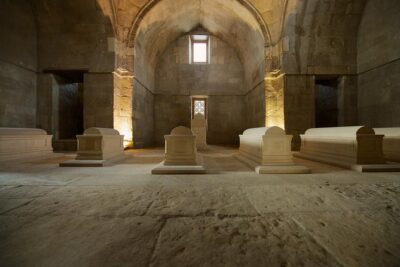
At the palace area, the guide connects it to the Shirvanshahs dynasty and the transfer of capital to Baku after a devastating earthquake. The palace is described as a 15th-century complex and UNESCO calls it one of Azerbaijan’s architectural pearls. It’s also grouped with the Maiden Tower as part of the UNESCO listing.
This is the other major practical point. Palace of the Shirvanshahs admission is not included, and the stop runs about 20 minutes. If you want to see the palace interior rather than just the exterior context, plan extra time and budget for the ticket.
Right nearby is Beyler Mosque, included as a national importance monument. The tour places it opposite the Murad Gate of the Shirvanshahs Palace complex.
Even if you only have a couple of minutes, the guide helps you link these buildings into a broader power-and-religion landscape.
Vahid Monument: a small stop that adds a human layer
You’ll also pass the Aliagha Vahid Monument, built in 1990 to honor the Azerbaijani poet and ghazal singer Aliagha Vahid (1895 to 1965). It’s part of the route at around 3 minutes.
Why I like this stop in an Old City tour is simple: you get at least a whiff of the modern cultural identity of Azerbaijan, not just the medieval layers. It also gives you a point to reorient in the middle of a dense route.
Price and value: $25 for a structured walk through UNESCO territory
At $25.00 per person, this tour sits in the “good value if you use it right” category. The biggest reason is that you’re getting a professional guide, a tight 2-hour route, and a lot of meaningful stops without needing to plan each one yourself.
The other value lever is entry planning. Most of the featured stops are listed with admission free. The ones that are not included are Maiden Tower and the Palace of the Shirvanshahs. So if you were already planning to pay for those anyway, the $25 starts to look even more reasonable.
Also, the small-group size matters. In a crowded Old City, a larger group can turn into constant waiting. Here, with a maximum of 15 travelers, the guide can keep the flow smoother, especially around tight lanes.
If you’re traveling at a pace where you like stopping for photos, asking questions, and taking a short look inside a place when possible, this structure fits well.
Who this tour suits best
I think this is a strong choice for:
- First-time visitors who want the UNESCO “musts” but also want more than one or two landmarks
- People who like guided storytelling rather than reading plaques
- Families and mixed-age groups, since the route includes shorter viewing moments plus a couple of culture stops like the miniature book museum
- Anyone who enjoys architecture but also wants daily-life context like the bathhouses
If you prefer long, independent wandering and you love getting lost on purpose, you might enjoy a self-guided day more. But if you want your time to count in a compact window, this tour makes that happen.
Should you book this Guided Old City Tour?
Book it if you want a structured, story-led walk through Icherisheher in a short timeframe, with enough variety to keep things interesting. The pricing makes sense when you factor in the professional guide, the small group size, and the number of historic stops that don’t require extra entry fees.
Skip it or reconsider if you strongly dislike the idea of paying separate admission for the Maiden Tower and Shirvanshahs Palace, or if you only want one or two big monuments and would rather spend the rest of your time wandering freely.
FAQ
How much does the Guided Old City Tour cost?
The price is $25.00 per person.
How long is the tour?
It runs for approximately 2 hours.
Where is the meeting point in Baku?
The tour starts at Gosha Gala Square, 47 Kichik Qala, Bakı, Azerbaijan.
Is this tour ticketing mobile?
Yes, the tour includes a mobile ticket.
How big is the group?
The tour has a maximum of 15 travelers.
Are any attraction admissions not included?
Yes. Admission for Maiden Tower and the Palace of the Shirvanshahs is not included. Other listed stops show free admission.
Is a professional tour guide included?
Yes, a professional tour guide is included.
What hours does the tour operate?
It operates Monday through Sunday from 10:00 AM to 6:00 PM.
What is the cancellation policy for a full refund?
Free cancellation is available. You can cancel up to 24 hours in advance for a full refund. If you cancel less than 24 hours before the start time, the amount paid is not refunded.
Latest Baku reviews
- Gobustan Magic of Mud Volcanoes and Ancient Petroglyphs★ 5.0 · 3 reviews
- Gobustan Tour and Mad Volcanoes – tour to stone age★ 5.0 · 3 reviews
- Gobustan & Mud Volcano★ 4.5 · 3 reviews
- All destinations included Baku city tour for 1 day★ 5.0 · 3 reviews
- A Full Day Adventure: Khinalug, Guba & Candy Mountains Tour★ 5.0 · 3 reviews
- Small-Group Day Trip to Gobustan, Mud Volcanoes, Ateshgah & Yanar Dagh★ 4.5 · 3 reviews
- A Private Day Trip to Shahdag Ski Resort★ 5.0 · 3 reviews
- Private Sheki Tour – Four Regions of Azerbaijan in one day★ 5.0 · 3 reviews
Baku Old City, compared.
Baku Old City Tour (officially by Old City Tours)
Read our review →
Baku Old City Wonders: A Walking Tour Through Time
Read our review →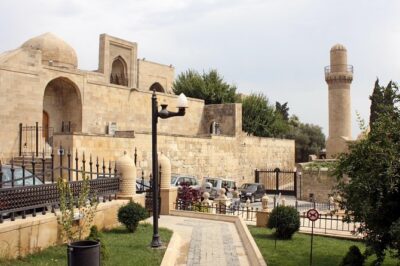
Browse the lists this tour appears in