Reviewed · BAKU TOURS
Become a Baku resident in a day
Baku’s best trick is contrast, and this day trip is built around it. You start in the UNESCO Old City, then watch modern Baku swing into view with Flame Towers and the city’s big architectural hits. I also like the way the day connects culture and meaning, not just photos.
Two things I really like: the Highland Park views that make Baku feel instantly readable, and the Gobustan stops where the terrain looks otherworldly. You get the feeling that Azerbaijan’s natural and human stories are happening in the same frame.
One practical consideration: it’s a lot in one day. The walking in parts plus optional off-road mud volcano transport means you should plan for a long stretch, and you’ll want solid shoes and water.
Key things that make this “Baku resident for a day” plan work
- Old City (Icherisheher) UNESCO walls and alleys, where history is right there at street level
- Highland Park photo stop plus guided explanation (good for orienting yourself fast)
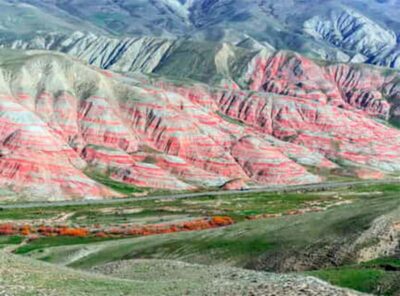
- Gobustan mud volcano area, with a lunar-like surface and bubbling features
- Bibi-Heybat Mosque, a reconstruction tied to a 13th-century original
- Fire Temple and Burning Mountain option, with entry tickets handled separately
- Modern Baku finale at Heydar Aliyev Center, photo and sightseeing only due to time limits
Where this tour fits in your Baku trip
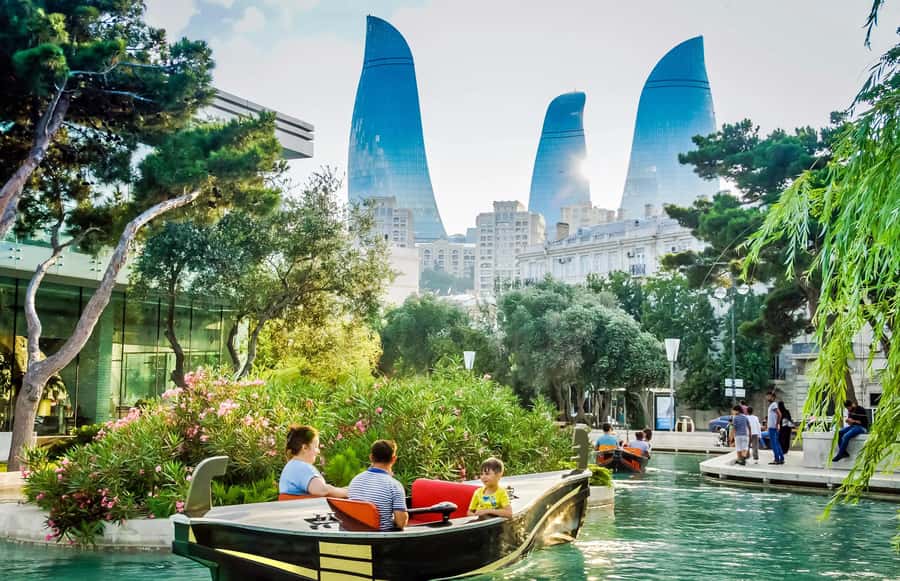
If it’s your first day in Baku, this works like a “get your bearings” route. You see the Old City first, then the futuristic skyline, then the dramatic natural setting at Gobustan, and finally you end in the modern design district. That order matters. It helps your brain connect places, so Baku stops feeling like a pile of landmarks and starts feeling like a map you can navigate.
The tour runs about 450 minutes. That’s roughly half a day plus transit, with a mix of walking and guided stops. The pace is active, and the bus keeps things efficient, but you still need to accept that this is not a slow wander.
Price is $30 per person, and the value comes from two things you actually get: a professional live guide and air-conditioned transportation. You are not paying extra just to sit on a bus, and you’re not on your own trying to figure out what matters at each stop.
More Baku days worth putting side by side
- Baku: Gobustan, Mud Volcano, Fire Mount, Temple Lunch Entry
★ 4.9 · 3,246 reviews - Baku: Guba, Shahdag, Laza & Lunch w/ Free City & Night Tour
★ 4.8 · 1,455 reviews - BEST Gobustan, Volcanoes & Absheron Fire Tour (Group or Private)
★ 5.0 · 1,254 reviews
Old City (Icherisheher): the “before and after” feeling starts here
You begin with the UNESCO Old City area, known as Icherisheher. This is where the medieval Baku vibe is strongest. Think ancient walls, older palaces, and narrow lanes that force you to slow down. You also get the benefit of a guide pointing out what you might otherwise miss, especially if you only know Baku from skyline photos.
What I like about starting here is emotional realism. Modern Baku is easy to admire from a distance. Old Baku is easier to understand up close. The Old City helps you notice details like stonework textures, the logic of street layouts, and the way landmarks cluster in older neighborhoods.
Practical tip: Wear comfortable shoes. Even if the walking segments are not the longest on the planet, the Old City streets can still feel uneven underfoot.
Highland Park: the fastest way to read Baku from above
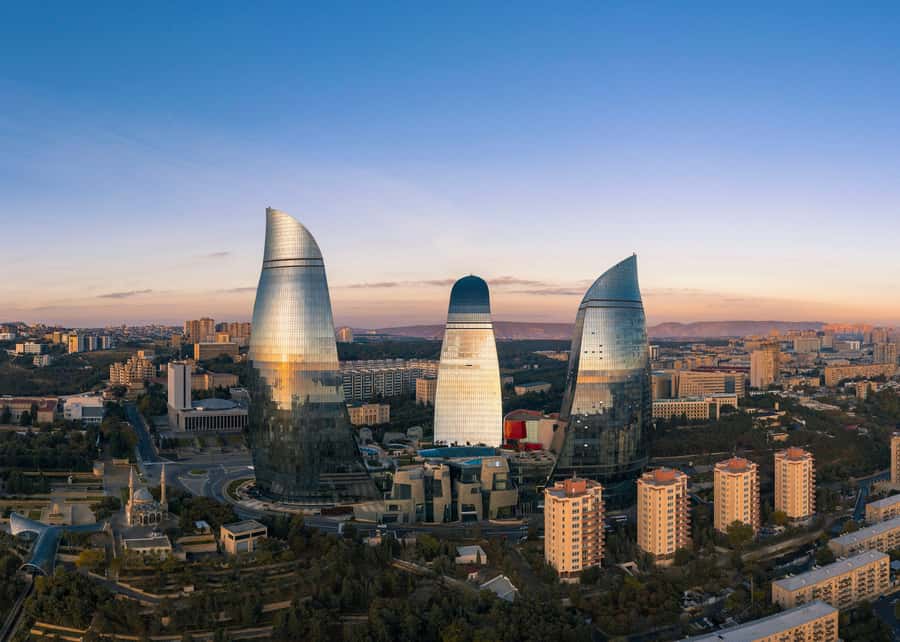
Next you head to Highland Park. This is where your camera comes out and your brain finally goes, oh, so that’s where everything is.
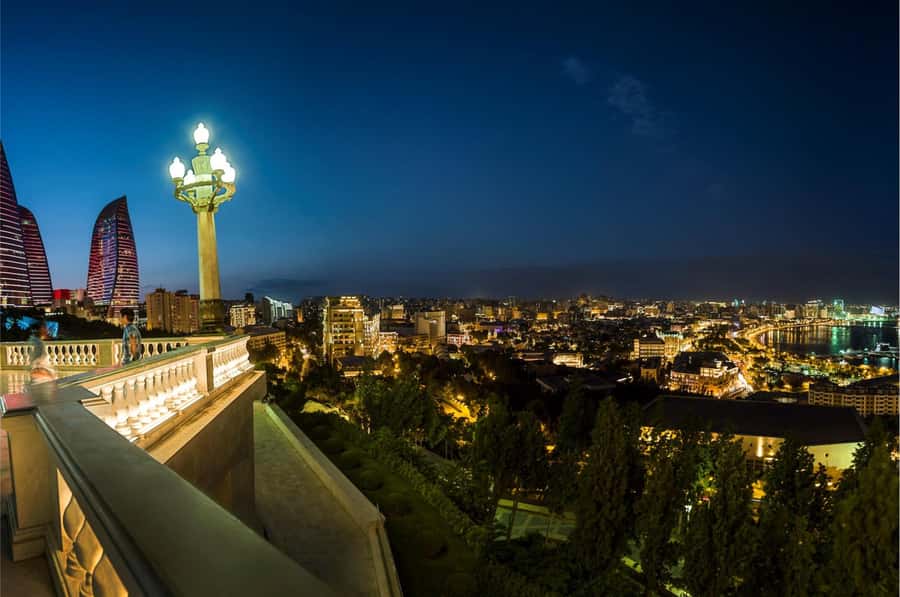
You get a photo stop and a guided tour for about 30 minutes, which is a smart time allocation. From this elevation, Baku’s pieces make sense together: sea views, skyline lines, and the relationship between older districts and newer development.
I love viewpoints like this on early days because they reduce the stress of later exploring. After a good overlook, street-level walks become more confident. You can orient yourself without constantly checking a map.
Flame Towers and the skyline: modern Baku in full show mode
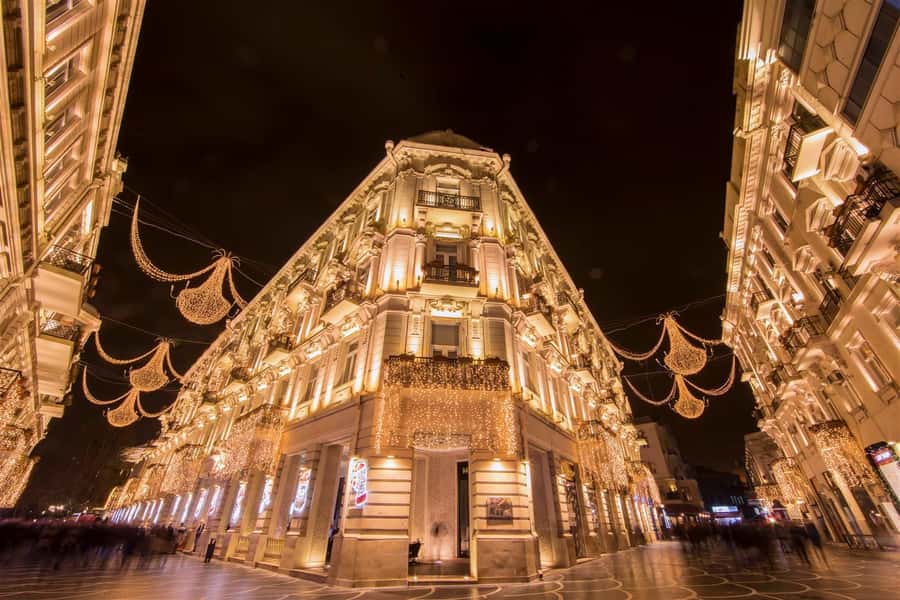
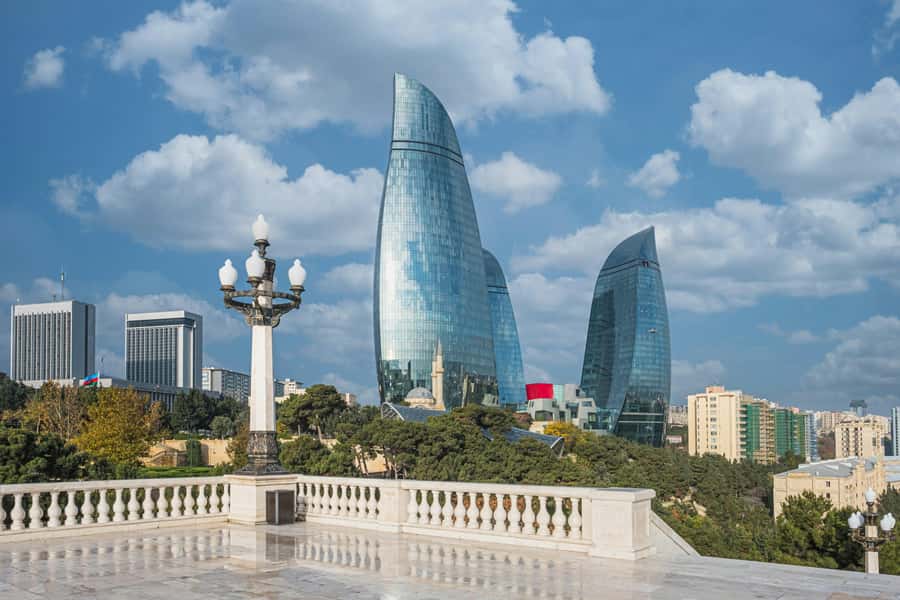
Then it’s time for Flame Towers. Even if you’ve seen them a hundred times in photos, seeing them in daylight does something different. The buildings look dramatic, but the bigger point is how this city designs around identity. In Baku, the skyline is not an accident. It’s a statement.
This part of the day includes a guided tour, so it’s not just a stop where you take a picture and move on. You’ll get context for why these landmarks matter in today’s Baku narrative.
If you’re photo-minded, plan for a little extra patience. The best angles are sometimes a step away from the obvious spot.
A different direction from Baku:
- Gobustan and Absheron tour (All inclusive)
★ 5.0 · 1,014 reviews - Shamakhi And Gabala Tour (All inclusive)
★ 5.0 · 815 reviews - From Baku: Gabala and Shamakhi Tour (Free Baku City Tour)
★ 4.8 · 695 reviews - Baku: Candy Cane, Guba, Khinaliq village with Homemade Lunch
★ 4.9 · 519 reviews
Azerbaijan Carpet Museum and the design touches you might not expect
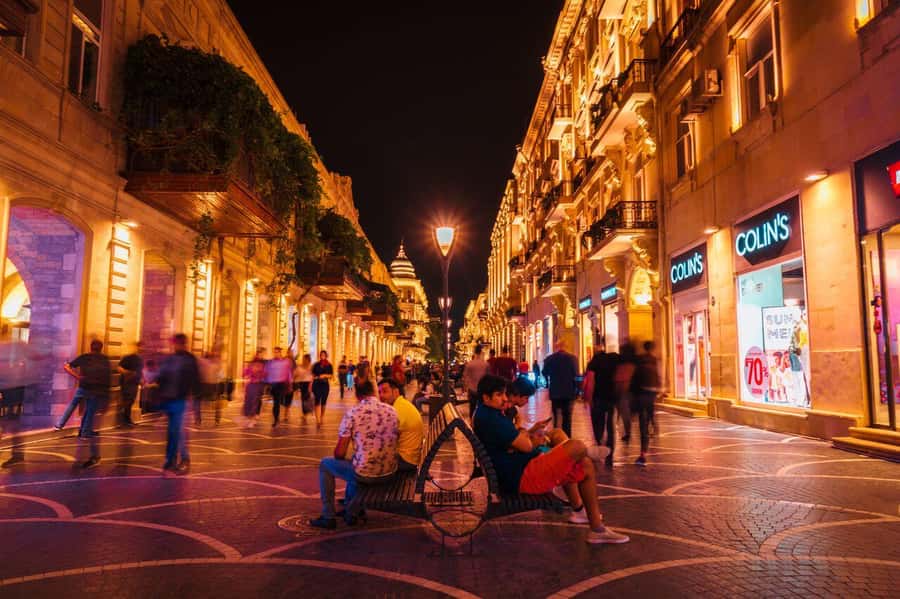
After the skyline stops, you’ll pass through a cultural block that includes the Azerbaijan Carpet Museum. Even if you are not a textile person, the whole point is that Baku’s identity shows up in crafts, not just architecture.
You get a photo stop and a walk, which means you’ll see enough to connect the dots without turning the day into a museum marathon.
You’ll also visit Philarmonia Garden and the Aliagha Vahid Monument, plus the Museum of Miniature Books. These are the kinds of stops that make the tour feel like more than a highlight reel. They add texture. They also help balance the big-ticket modern landmarks with quieter cultural details.
Walking pace plus meaning stops: don’t over-pack your expectations
Between major sites, you have walking segments and guided introductions at several points. That’s where a good guide makes a difference. In past trips I’ve taken like this, the guide can turn a quick stop into something you remember.
Based on guide names I’ve seen associated with this tour, people have praised guides such as Tim and Javid for making the explanations clear and relaxed. That matters because some landmarks are best understood with a bit of context, not just a glance.
So here’s my advice: don’t try to do homework on every site before you go. Let the guide do their job, and treat your job as paying attention.
Baku Boulevard, National Flag Square, and the oil story in plain sight
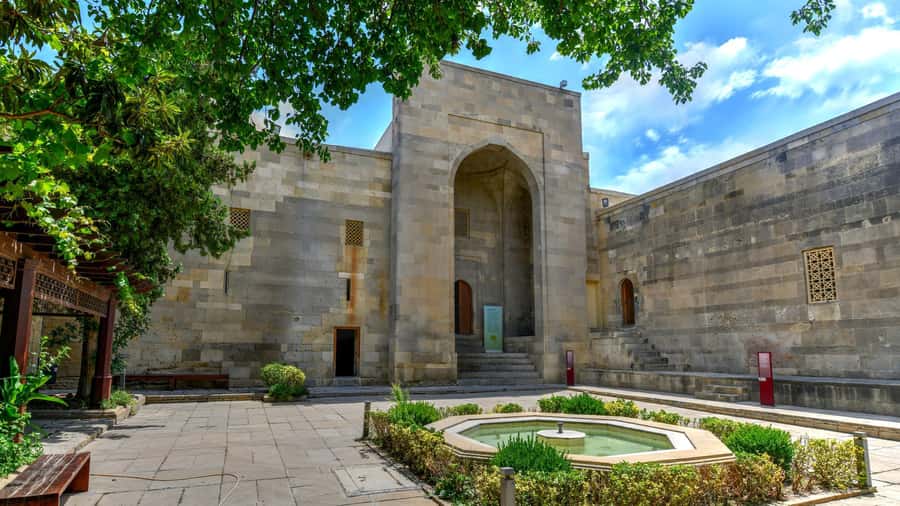
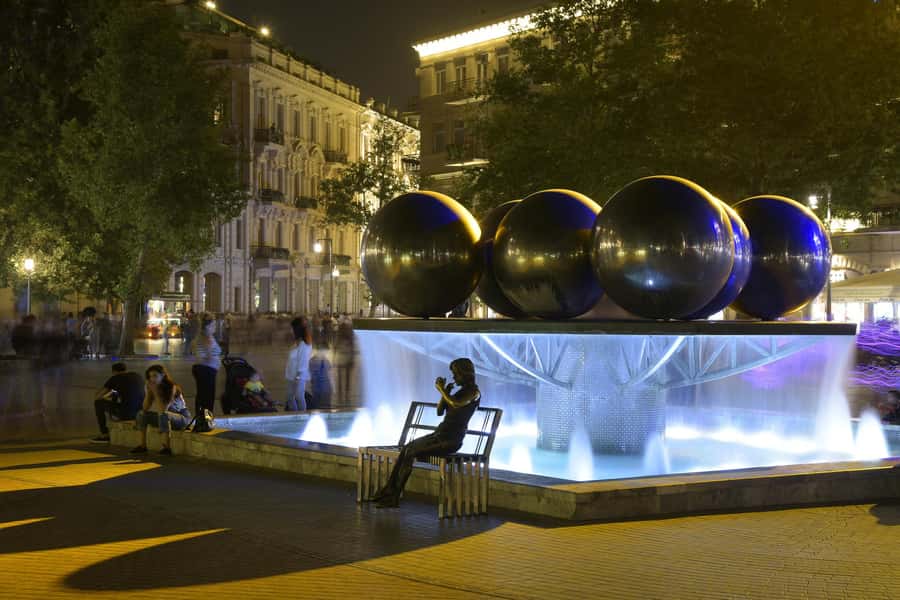
Back in the city, you’ll also take in Baku Boulevard and the National Flag Square. You’ll see the site of the first oil well in the world, a marker of the oil boom that shaped Baku in the 19th century.
This is one of those moments where Baku’s past stops being a classroom topic. You can physically stand in the geography of industry and understand why the skyline looks the way it does. Azerbaijan’s modern energy story is not abstract. It’s part of the city’s bones.
If you like history but hate slow museums, these streetside stops are a good compromise.
Bibi-Heybat Mosque: a spiritual landmark with a historical backbone
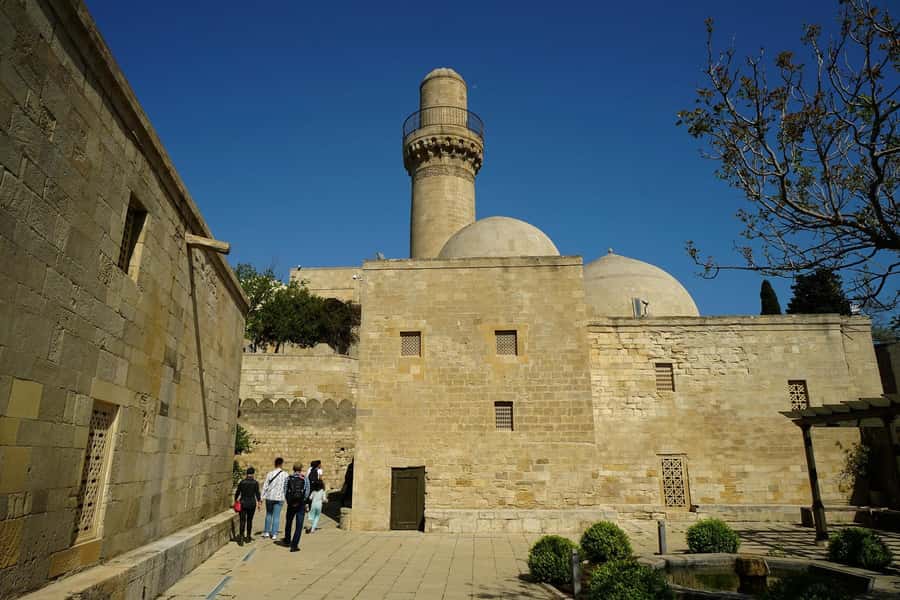
One of the highlights is Bibi-Heybat Mosque. The important detail here is that what you see today is a reconstruction of a 13th-century mosque. That gives the visit real weight. You’re not just ticking off a building. You’re seeing how older religious heritage has been carried forward.
This stop is also valuable because it slows the day down in a good way. A mosque visit naturally changes your pace. It’s quiet compared to the high-energy views and skyline shots.
Bring a respectful mindset and comfortable walking shoes, because getting good angles and moving through the area still takes some attention.
Gobustan: the mud volcano terrain and rock art vibe
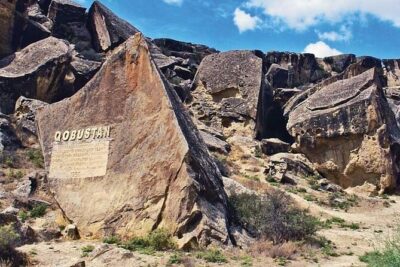
Now comes the part that feels like a different planet: Gobustan. You’ll explore the lunar-like landscape and then hit the area with bubbling mud volcanoes. This is the kind of terrain where pictures almost never do it justice, because you see the changes in texture up close.
Important: entry tickets and transport fees are separate. You should be ready for this section to include extra payments at the start so you don’t lose time later.
Gobustan rock arts entry is listed as 10 AZN. Then for the mud volcanoes, there is an off-road cars fee of 30 AZN cash per person that is mandatory and collected at the start. If it rains, you’ll go to the Mud Volcanoes Complex instead, and the same 30 AZN cash applies. The point of this system is no surprise charges later.
My practical take: have cash ready and count your money once before you leave the meeting point. It speeds everything up.
Fire Temple and Burning Mountain: worth it if you like symbolic sites
The tour also mentions stops tied to Ateshgah and Yanardagh, with entry tickets listed at 15 AZN for Ateshgah and Yanardagh.
Even if you are not chasing every Zoroastrian reference, this is one of those places where the symbolism of fire connects to how people lived, believed, and used natural phenomena. It also adds variety after Gobustan, because you move from strange geology to a place defined by its relationship to fire.
Keep in mind the tour structure: if you choose options with entry tickets, you still follow the group schedule. If you don’t, you are responsible for buying your tickets on your side.
Military Trophy Park: recent history displayed with a heavy tone
Near the end, you’ll visit Military Trophy Park, which features equipment and exhibits tied to the 2020 Nagorno-Karabakh war.
This is not a light, pretty-stop kind of place. It’s a recent-history checkpoint, and it will likely hit differently than the architectural sites. If you are traveling with sensitive family members or you prefer only scenic stops, you may want to mentally prepare for the emotional tone.
From a tour-planning perspective, I appreciate that this stop is included. It makes the trip feel more honest. Baku is not only skyline and sunshine.
Heydar Aliyev Center: modern design as a final photo moment
Your final point is the Heydar Aliyev Center. The key detail: it’s visited for sightseeing and photo opportunities, and groups do not enter the interior due to time constraints.
That matters for expectations. If your goal is interior rooms and guided museum-style time, you’ll want a different plan. But if you want exterior design impact, this works as a clean finale. It’s also a good “wrap up” for the day, because it closes the loop on the modern Baku theme.
If you get even a few good photos here, you’ll feel like the day had a strong bookend: Old City past, modern skyline present, and a big design statement at the end.
What’s included, what’s not, and how to budget like a pro
The tour includes:
- A professional guide
- Transportation by air-conditioned bus
Not included:
- Meals and drinks
- Personal expenses
On top of the base cost, plan for optional or separate park and site entries. The tour data lists these as the specific entrance fees you should expect:
- 10 AZN for Gobustan Rock Arts
- 30 AZN cash mandatory for off-road cars for mud volcanoes (same 30 AZN applies if it rains and the route changes to the Mud Volcanoes Complex)
- 15 AZN for Ateshgah and Yanardagh
So the real value equation is this: you pay $30 for the guide and transport, then you pay site fees to actually access the most important natural and heritage areas. That’s pretty normal for tours like this, but it’s worth budgeting cash for the mud volcano section.
One more practical note: bring water, sunscreen, and a hat. The day includes sun exposure, and Baku weather can be bright even when you feel cool.
How to handle timing and the one-day sprint feeling
This experience is long enough that you can get tired, but it’s also short enough that you need to commit to the flow. I suggest treating it like a curated introduction. If you try to turn it into a second-by-second sightseeing marathon, you’ll feel behind.
Also, double-check your pickup details closely. There’s one clear lesson from real-world experience: pickup points can change at the last moment, so you should confirm where to meet when the provider contacts you with the exact pickup location. If you’re easygoing, it’s fine. If you hate uncertainty, confirmation will make you happier.
Finally, there’s a rule: no smoking.
Who this tour suits best, and who should skip it
This is best for:
- First-time visitors who want a strong overview of Baku’s old and new
- Travelers who like guided context, not just wandering
- People comfortable with a mix of bus time plus walking and sightseeing stops
This is not suitable for:
- Children under 5 years
- People with mobility impairments or wheelchair users
If you’re in that last category, you’ll want a different format that can be more flexible and less walking-heavy.
Should you book this Become a Baku resident in a day tour?
Book it if you want a fast, guided sampler that actually connects Baku’s story: Old City foundations, modern skyline identity, natural drama at Gobustan, and a sobering recent-history stop at Military Trophy Park. At $30, plus guide and transport included, it’s a cost-effective way to cover a lot without planning a route yourself.
Skip it if you want slow travel, deep museum time, or full interior access to major sites. Also consider skipping or changing plans if you don’t like the idea of extra cash fees for mud volcano transport and separate entries.
If you do book: show up with cash ready for the Gobustan mud volcano transport, wear comfortable shoes, and confirm your pickup meet point when contacted. That’s how you make this kind of one-day sprint feel smooth instead of stressful.
FAQ
How long is the Baku highlights tour?
The duration is listed as 450 minutes.
What is included in the price?
The tour includes a professional guide and transportation by air-conditioned bus. Meals and drinks are not included.
Do I need separate tickets for Gobustan and other sites?
Yes. The tour lists separate entrance fees for Gobustan Rock Arts (10 AZN) and Ateshgah and Yanardagh (15 AZN). It also states a 30 AZN cash mandatory off-road cars fee for mud volcano access.
Is the Heydar Aliyev Center visited inside?
No. The data says Heydar Aliyev Center is the final point for sightseeing and photo opportunities only, and groups do not enter the interior due to time constraints.
What should I bring for the day?
Bring comfortable shoes, a hat, a camera, sunscreen, and water.
What happens if it rains at the mud volcano section?
If it rains, the plan changes to go to the Mud Volcanoes Complex. The 30 AZN cash payment for the mud volcano part is the same.
FAQ
Is this tour suitable for young children or wheelchair users?
The tour is not suitable for children under 5 years, and it also lists it as not suitable for people with mobility impairments and wheelchair users.
What languages is the live guide available in?
The live tour guide is available in English and Russian.
Latest Baku reviews
- Gobustan Magic of Mud Volcanoes and Ancient Petroglyphs★ 5.0 · 3 reviews
- Gobustan Tour and Mad Volcanoes – tour to stone age★ 5.0 · 3 reviews
- Gobustan & Mud Volcano★ 4.5 · 3 reviews
- All destinations included Baku city tour for 1 day★ 5.0 · 3 reviews
- A Full Day Adventure: Khinalug, Guba & Candy Mountains Tour★ 5.0 · 3 reviews
- Small-Group Day Trip to Gobustan, Mud Volcanoes, Ateshgah & Yanar Dagh★ 4.5 · 3 reviews
- A Private Day Trip to Shahdag Ski Resort★ 5.0 · 3 reviews
- Baku Private Airport Transfer★ 5.0 · 3 reviews
Baku Tours, compared.
Gobustan, Mud Volcano, Fire Mount, Temple Lunch Entry
Read our review →
Guba, Shahdag, Laza & Lunch w/ Free City & Night Tour
Read our review →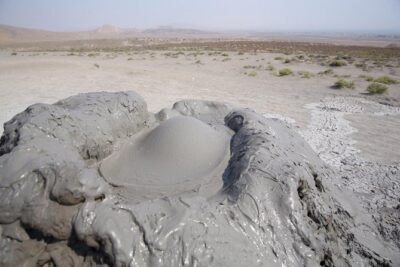
BEST Gobustan, Volcanoes & Absheron Fire Tour (Group or Private)
Read our review →
Candy Cane, Guba, Khinaliq village with Homemade Lunch
Read our review →