
Reviewed · WALKING TOURS
Baku Soviet Architecutre Gudied Walking Tour
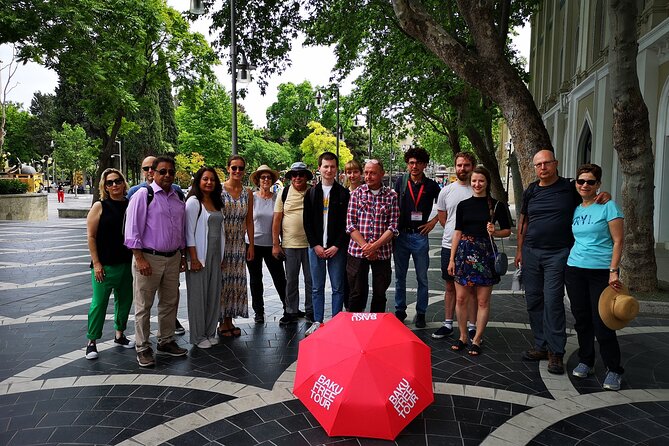
This tour is interesting because Baku does not separate old politics from modern life. You see the Soviet footprint in grand facades and street layouts, then you connect it to today’s shopping streets, theatres, and hangout zones. With guide Gani leading, the stories feel personal, not like a textbook.
Two things I especially like are the small group size (max 15) and the way the guide keeps questions welcome. In the reviews, people repeatedly mention Gani’s patience, friendly humor, and clear English, and that kind of guide really matters on a walking tour where everyone wants to ask something.
One drawback to plan for: it is mostly a downtown foot route with multiple short stops. If you want long museum time or a slower pace with deep indoor experiences, this may feel like more “see and connect” than “sit and study.”
Key things to look forward to
- Soviet landmarks plus modern hangout streets in one continuous walk
- Gani’s storytelling style that links residents, myths, and pop culture to what you see
- Free admission stops at every listed site, so your money goes to the guide time
- A practical 2.5 to 3 hour schedule, leaving the rest of your day open
- Ends with a cup of local tea, a nice low-key way to wrap up
Soviet Baku still feels current on these streets
The best part of this walk is how it treats architecture like a living language. Soviet-era design is not just old concrete. In Baku, it shows up in scale, symmetry, and the confidence of public buildings built to shape how people moved and gathered.
And then the tour flips the switch to modern city life. You walk through the commercial core and pedestrian-friendly segments where people linger after work, stop for snacks, meet friends, and swing by theatres and concert halls. That connection is what makes this more than a photo walk.
If it is your first day in Baku, it is also a smart way to get your bearings fast. Even if you later explore on your own, you’ll understand why these streets matter, not just what they look like.
More walking tours in Baku:
- Baku: Stunning Walking Tour of Historical and Modern City
★ 4.9 · 270 reviews - Baku Oil Heritage & Old Town Walking Tour
★ 5.0 · 232 reviews - Baku Walking Tour (Old City)
★ 5.0 · 127 reviews
Price and what you actually get for $60
At $60 per person for about 2 hours 30 minutes (plan closer to 3 hours in real life), you are paying mainly for guide time, route design, and interpretation. The good news is that the listed sights have free admission tickets for the tour stops, so you are not stacking extra entry fees on top.
You also get a small-group format, which makes a difference on a topic like Soviet architecture, where details like facades, street names, and historical changes matter. In a large group, those points get lost. Here, you get enough time to ask questions without feeling rushed.
One more value factor: the tour includes a final cup of coffee and/or tea, ending with local tea at a coffee shop. It is a small inclusion, but it helps you cool down and reset before you go do the rest of your day.
Meeting point and timing, so you do not waste your afternoon
The meeting point is Karnaval-353 Istiglaliyyat, Baku 1005 and the tour begins at 1:00 pm, finishing back at the same location. That round-trip structure is convenient because you do not have to negotiate transit right after the walk.
It is also helpful that the tour is designed around a manageable stretch of downtown. The listed stops are short blocks of time, so you get variety without burning your whole day.
As a practical heads-up, this experience is often booked ahead, with an average booking window of around 11 days. If your dates are firm, reserve early so you do not have to compromise your schedule.
Fountain Square, where oil-boom energy became a public stage
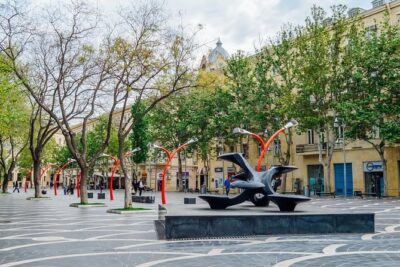
You start at Fountain Square, which today feels like downtown’s leisure and entertainment center. The story behind it is what makes the opening stop work. This neighborhood developed as the main trading street during Baku’s oil boom era, in the late 1800s and early 1900s.
What that means for you on the ground: the space is not random. It is built around how a growing boom town needed movement, commerce, and a public face. When you begin here, you set up a theme for the rest of the tour, the shift from early wealth and urban ambition to later political and architectural styles.
Even if your walk day includes shopping and cafés later, this first stop helps you understand why people gather where they gather.
More Baku days worth putting side by side
- Baku: Gobustan, Mud Volcano, Fire Mount, Temple Lunch Entry
★ 4.9 · 3,246 reviews - Baku: Guba, Shahdag, Laza & Lunch w/ Free City & Night Tour
★ 4.8 · 1,455 reviews - BEST Gobustan, Volcanoes & Absheron Fire Tour (Group or Private)
★ 5.0 · 1,254 reviews - Gobustan and Absheron tour (All inclusive)
★ 5.0 · 1,014 reviews
Nizami Street and the theatre-and-shop rhythm of modern Baku
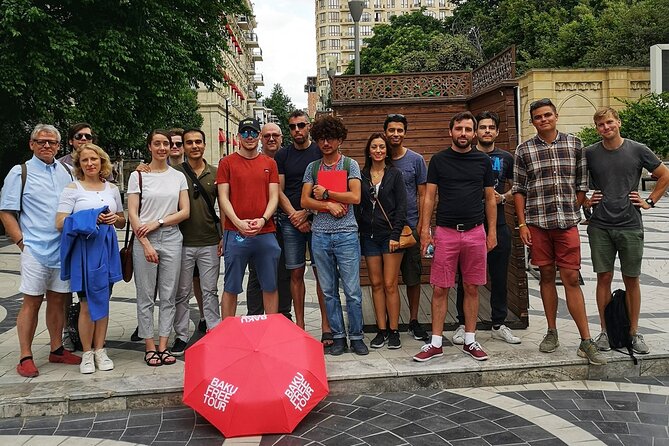
From Fountain Square you move toward Nizami Street, the modern shopping and entertainment core. A key detail here is that a long segment is traffic-free, so the street becomes a social space rather than a roadway.
This stop gives you a feel for post-work life in Baku. People take time after work to relax in restaurants, shops, and entertainment venues. The tour uses this stretch to connect past and present: different eras, same idea that the city center exists for public life.
You’ll also get a quick look near a busy intersection where you can see Stalinist architecture from the 1950s. The point is not just to spot style, it is to notice how power and planning translated into physical design.
Quick hit at the Nasimi Monument area
Right around the intersection of Samad Vurgun and Nizami streets, you pause for views tied to the 1950s Stalinist period. This is a short stop, about 15 minutes, so think of it as a “pattern recognition” moment.
If Soviet Baku is new to you, this kind of brief pause is useful. You notice the look, then you move on with the tour’s stories still in your head.
Nizami Cinema area and how music shaped nation-building
Next you walk to the Nizami Cinema area, tied to 28 May Street, which commemorates Azerbaijan’s first independence declaration in 1918. The setting matters because it is about more than dates. It’s about how identity gets reinforced in public spaces.
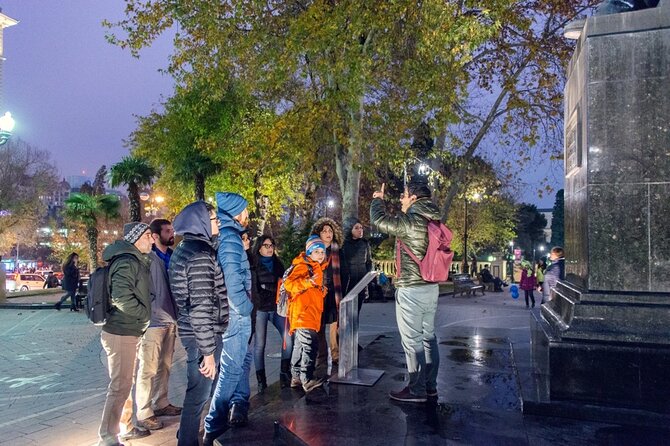
Here the tour connects arts to nation-building. You’ll hear discussion around Qara Qarayev, a major classical composer, with his statue located in this area. The message is simple and smart: cultural figures are not background characters in history. They are part of how a country tells itself who it is.
If you like walking tours where you learn why a place got named or decorated, this stop is a good one.
Opera and Ballet Theatre, art as a public landmark
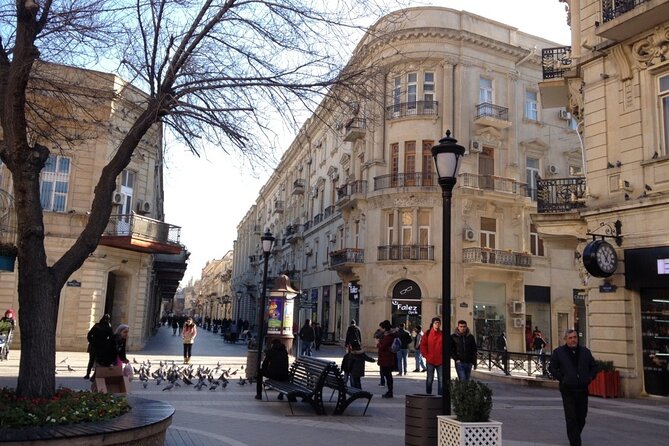
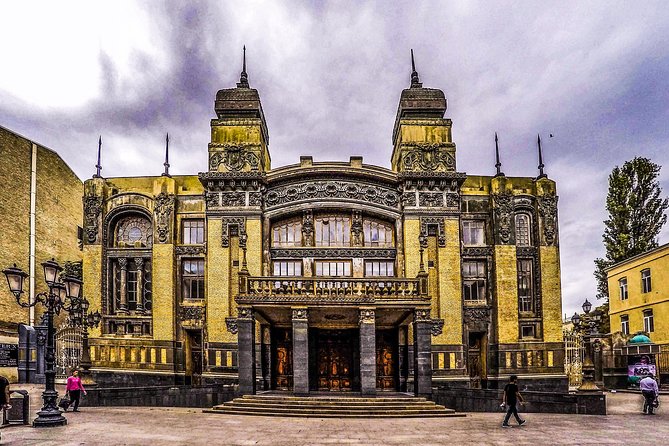
You spend about half an hour walking through the cultural cluster around Nizami Street, including the Azerbaijan State Academic Opera and Ballet Theatre. This is one of those areas where Soviet-era grandeur meets a long-standing expectation that public buildings should be cultural anchors.
The tour also connects song theatre, the National Library, and the broader heritage of artistic Baku. You get a sense of how the city uses major institutions to project values, education, and identity.
Drawback to note: the theatre stop is more about context and external orientation than a long sit-down visit. If you want to go inside for a performance or deeper look, plan that separately after the walk.
Khagani Street, Molokanskaya roots, and a Russian-language neighborhood story
One of the most interesting sections is Khagani Street and the park area. Historically, the street and park were known as Molokanskaya, named after spiritual Christians exiled to Azerbaijan from Russia.
The tour also points out Khagani Park and the Russian Drama Theatre, and then it shifts into society and language in Azerbaijani life. This is where the “Soviet and modern” theme becomes more human. It is not just politics on buildings. It is the mix of communities that lived side by side and how cities absorbed people over time.
If you care about how different groups shaped urban culture, you’ll likely enjoy this stop. It gives you a perspective that most quick city walks skip.
National Museum of History and the Taghiyev rags-to-riches story
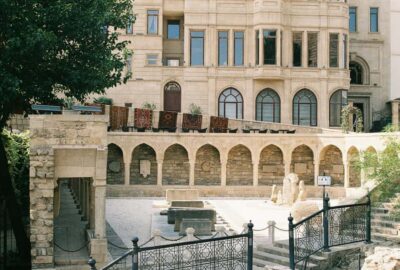
Then you reach the National Museum of History of Azerbaijan, a site tied directly to a dramatic personal story. The museum was once the private residence of Haji Zelnalabdin Taghiyev, often described as the father of the nation.
Why that matters: a private residence turned museum means you can learn history through space and design choices, not only through labels. The tour uses the ornate interior and the building’s layout to tell Taghiyev’s story from rags to riches.
This is one of the stops where your imagination can do work. Even if you do not linger long, the idea of a major fortune shaping public identity helps you understand the long arc of Baku’s development.
Government House, a giant Soviet landmark that changes the scale
Next comes the Government House, described as a gigantic and iconic Soviet landmark in Baku. This is a powerful visual break from the street-level flow of shopping areas and parks.
On this stop, the tour’s goal is not just to label it as Soviet. It helps you see how Soviet urban planning often aimed for authority you could feel immediately. Large, formal, and meant to impress from a distance.
If you take photos, this is one of your best targets. If you do not, still spend the full time. The meaning is in the approach and the scale, not only the facade.
Baku Boulevard and that oil-era seafront idea, built step by step
You finish by the Baku Boulevard in Dənizkənarı Milli Park, the promenade along Baku’s seafront. The big historical hook here is that the promenade was established in 1909, and its story goes back more than 100 years, to the era when oil barons built mansions along the Caspian shore.
The tour also mentions how the seafront was built up inch by inch. That kind of detail helps you understand the promenade as an engineered public space, not just a pretty walkway.
The timing also works well for most people. A seaside stroll after a dense downtown walk is a natural reset for your feet and your eyes.
Ending with tea, a simple way to close the loop
After the walking segment, the tour wraps with coffee and/or tea, specifically a cup of local tea at a coffee shop. It is a good moment to reflect on what you just learned, because the route has moved through several identities of the city.
And it’s practical too. You’ve been on your feet, you’ve been asking questions, and now you can slow down with something warm without needing to hunt for a café immediately.
The guide is the real engine of the experience
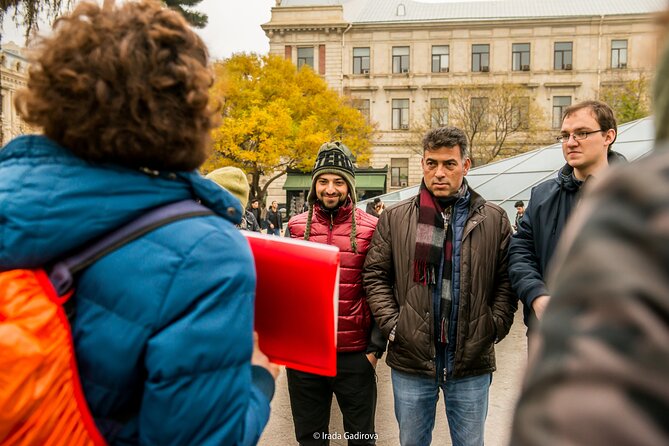
This tour earns its near-perfect rating because the guide seems to set the tone. People highlight that Gani is patient, kind, and very good at answering questions. They also mention his humor and the fact that he does not keep people on autopilot.
That matters because Soviet architecture can feel abstract if the guide does not connect it to everyday life. In this tour, the stories tie together legends, myths, residents, and modern pop culture, so the visuals become meaningful.
Pace is another big theme in the reviews. The guide adjusts speed to the group and avoids that stressed feeling you get on some tours. On a walking route with lots of short stops, this flexibility is more than comfort. It helps you actually absorb what you are seeing.
What to wear and what to bring for this style of walk
Because the route is downtown and stop-and-go, your best friend is practical footwear. Wear shoes you trust for city walking, and plan on moving between clusters rather than waiting around.
Bring water, and consider sun protection, since downtown streets and promenades can get bright. If you like taking photos, bring a charged phone or camera, but keep in mind you will get the most from listening first, then shooting.
Also, since the tour includes a tea stop at the end, you can plan not to squeeze in a snack immediately after. Let the walk finish and then eat when you feel like it.
Is this tour for you, or should you skip it?
You’ll probably love this tour if:
- You want an easy introduction to central Baku with a clear theme
- You like architecture stories that connect to people and culture
- You prefer small groups where questions are welcome
- You want a solid 2.5 to 3 hour activity, then freedom the rest of the day
It may not be the right choice if:
- You want long indoor museum time or an all-day deep dive into one neighborhood
- You have limited stamina for city walking and short stop transitions
- You’re only interested in one type of Baku, for example only old city alleys, because this focuses more on downtown and major public spaces
Should you book this Soviet architecture guided walk in Baku?
If you are trying to decide what to do on your first trip into Baku’s center, I would book it. The value is strong because most stops are free entry, the group stays small, and you get a guide who makes Soviet design understandable in today’s terms.
Pick it early in your stay if you can. You will come away with street context that makes later wandering feel smarter, not random. And if you want a route that balances modern shopping life with Soviet-era landmarks, this is one of the most direct ways to do it without spending all day planning.
FAQ
How long is the Baku Soviet Architecture guided walking tour?
The tour lasts about 2 hours 30 minutes, but you should plan for around three hours to account for time spent walking and stopping.
What does the tour cost, and is it worth it?
It costs $60 per person. The listed stops include free admission ticket entries, so your main expense is paying for a guide and the walking route, not extra site fees. Tea and/or coffee are included at the end.
Where does the tour start and where does it end?
It starts at Karnaval-353 Istiglaliyyat, Baku 1005, Azerbaijan, and it ends back at the same meeting point.
What is included in the price?
Coffee and/or tea is included, with the tour finishing with a cup of local tea at a local coffee shop.
Is the tour suitable for most people?
Most travelers can participate. Service animals are allowed, and the meeting area is near public transportation.
What happens if weather is poor?
This experience requires good weather. If it is canceled due to poor weather, you will be offered a different date or a full refund.
Latest Baku reviews
- Gobustan Magic of Mud Volcanoes and Ancient Petroglyphs★ 5.0 · 3 reviews
- Gobustan Tour and Mad Volcanoes – tour to stone age★ 5.0 · 3 reviews
- Gobustan & Mud Volcano★ 4.5 · 3 reviews
- A Full Day Adventure: Khinalug, Guba & Candy Mountains Tour★ 5.0 · 3 reviews
- All destinations included Baku city tour for 1 day★ 5.0 · 3 reviews
- A Private Day Trip to Shahdag Ski Resort★ 5.0 · 3 reviews
- Small-Group Day Trip to Gobustan, Mud Volcanoes, Ateshgah & Yanar Dagh★ 4.5 · 3 reviews
- Private Sheki Tour – Four Regions of Azerbaijan in one day★ 5.0 · 3 reviews
Walking Tours, compared.
Stunning Walking Tour of Historical and Modern City
Read our review →
Baku Old City Wonders: A Walking Tour Through Time
Read our review →
Browse the lists this tour appears in