
Reviewed · ATESHGAH FIRE TEMPLE
Baku: Atashgah Fire Temple & Burning Mountain Half-Day Tour
A half-day combo of Ateshgah Fire Temple of Baku and Yanardag’s ever-burning hillside is one of the strangest, most memorable ways to see the Absheron Peninsula. I like that the flames are not a show, they are fed by natural gas. I also love the mix of fortress-like stonework at Ateshgah and the movie-scene wall of fire at Yanardag. One drawback to keep in mind: the half-day schedule can be affected by how the operator strings together a morning and afternoon run, so you should expect some timing uncertainty.
You’ll get a live guide and a minivan or van ride, typically enough time to cover both stops without feeling rushed. The tour is only 3 hours, so you’ll want your questions ready, good walking shoes, and a bit of patience if the logistics get a little messy.
If you want a compact, hands-on look at why Baku is tied to fire worship and natural gas miracles, this is a solid choice.
Key highlights you will actually care about
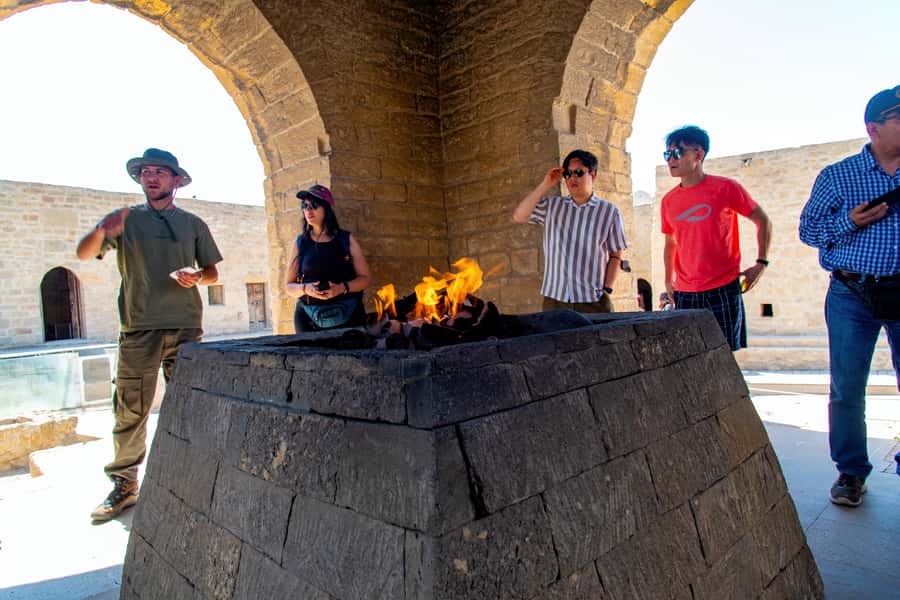
- Gas-fed Ateshgah flames: natural gas flows from the ground to keep the central fire burning
- Fortress courtyard design: stoned-fenced layout with cells where ascetics and pilgrims once practiced rituals
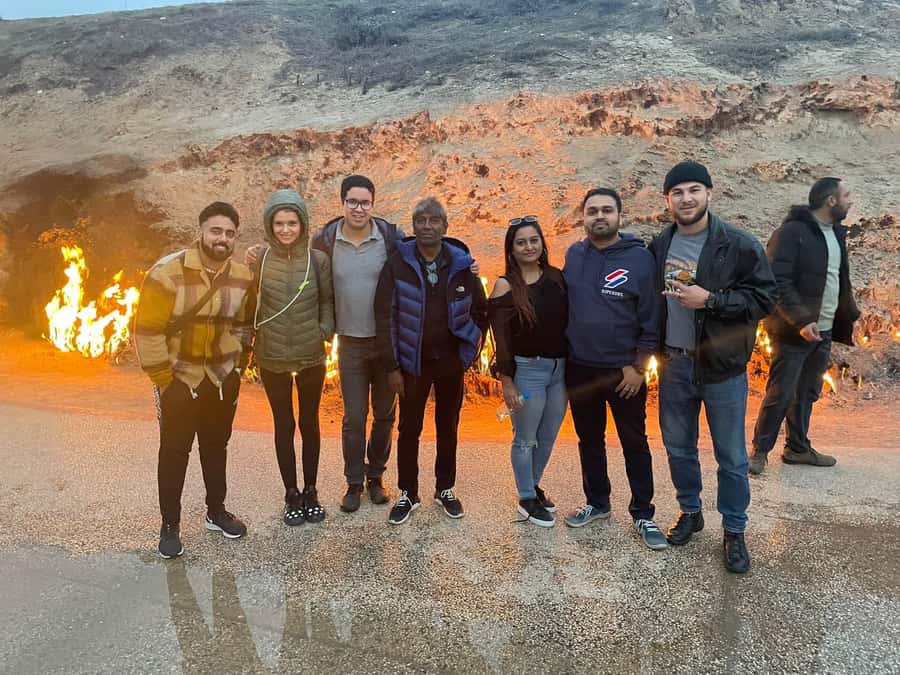
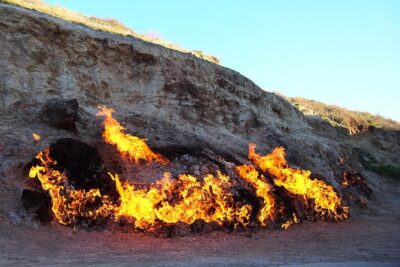
- Yanardag’s burning wall of flames: a hillside that keeps producing flames from gas leaks in rock
- Tight 3-hour structure: enough time for both sites without a full-day commitment
- English or Russian guide: live guidance through the key historical and natural explanations
Ateshgah Fire Temple: the gas-fed “fortress” with ritual cells
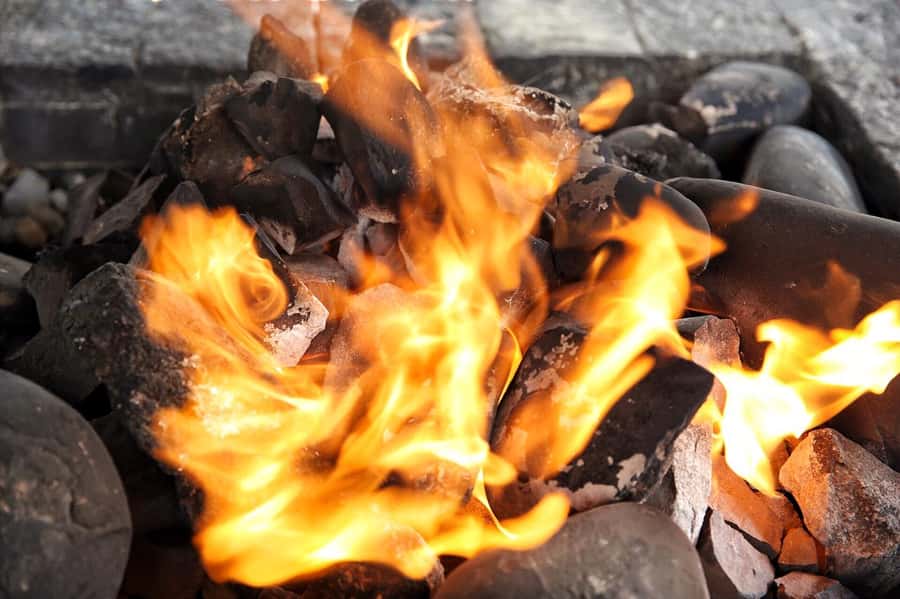
Ateshgah, sometimes called the Fire Temple of Baku, is about 21 km east of Baku. The big idea here is simple, and it’s why people keep coming back: there’s permanent natural gas flowing from under the ground, and the site was developed in the 18th century by Indian merchants.
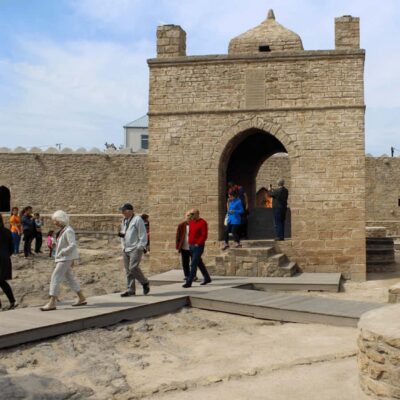
What you’ll notice first is the setting. Instead of a big open monument, Ateshgah feels more like a small fortress. You move through a stone-fenced courtyard, and inside there are cells. The layout matters, because it suggests a controlled space for worship and practice, not just sightseeing. The central fireplace sits in the middle with natural gas ventilation, so the fire has a steady, practical source. You can also see smaller flames on the pavilion rooftop corners, a design detail that makes the whole place feel intentionally planned rather than accidental.
This is also where the human story comes in. Ateshgah is linked with fire worshipping traditions from medieval ages, and the temple’s cells and circular movement around the central flame are part of how ascetic believers and pilgrims were meant to spend time at the fire. Even if you’re not religious, you can still read the architecture like a map of a routine. It’s one thing to hear about fire worship, and another to stand in a space engineered around flame.
Practical note: because you’re dealing with an active fire and historical stone structures, you’ll get the most out of your visit if you listen closely to your guide about how the gas and ventilation system works. It’s the difference between seeing a dramatic scene and understanding why it keeps going.
Potential drawback: Ateshgah is fascinating, but it is still a temple site. If you show up expecting a long wander with loads of free time, your half-day timing might feel tight.
More trips to the burning mountain:
- Baku: Gobustan, Volcanoes, Fire Temple and Yanardag Day Trip
★ 4.7 · 433 reviews - Gobustan & Mud, Fire Temple, Burning Mountain (Group & Private)
★ 4.5 · 418 reviews - Gobustan, Mud volcanoes, Fire temple, Fire mountain PRIVATE TOUR
★ 5.0 · 47 reviews
Yanardag Burning Mountain: why the flames keep spilling out of rock
After Ateshgah, you’ll head to Yanardag State Historical, Cultural and Natural Reserve. The drive takes around 35 to 40 minutes, which is long enough for a breather, but short enough that you don’t lose momentum.
Yanardag literally means burning mountain, and the core attraction is a constantly burning wall of flames. The cause is physical, not theatrical. Thanks to tectonic shifts and volcanic material below the earth’s surface, natural gas leaks out through the rocks. That’s the mechanism that turns this hillside into a living light source.
This is also one of those places where old travel writing gets people excited. Marco Polo mentioned the flames during his travels in and around Baku, and while we can’t treat an early mention like a lab report, it does give you context for why this spot has drawn visitors for centuries. Even today, the appeal isn’t just the fire. It’s the feeling that the ground itself is part of the story.
What I like about Yanardag, for practical travelers, is that it’s easy to appreciate without special knowledge. You don’t need to be a geology student to get it. The guide will connect the dots, but the site does plenty on its own.
One consideration: because flames are coming from natural gas leaks, this is not something you treat like a theme park. Stay where you’re directed, keep an eye on footing, and don’t try to chase the best photo angle if it pushes you off safe paths.
The 3-hour flow in real life: how the half-day usually feels
This is a 3-hour tour, so think of it as a focused sprint: transport to two sites, guided explanations, and enough time to take everything in. The tour includes transportation in a minivan or van and entry tickets to the main attractions.
In a perfect world, the rhythm is clean. In the real world, half-day tours often depend on the operator’s wider schedule, and that can affect timing. If the half-day is slotted as an extension of a full-day run, the day can start late or run differently than expected. A common friction point is pickup timing and where you’re expected to meet. Some schedules may also include a lunch window for the group segment that started earlier, which can shift the timeline for the afternoon component.
So here’s my advice if you book this: message ahead and get clarity on the exact pickup time and meeting point. Don’t assume it will arrive automatically the day before. Also, build in a small time buffer in your overall day plan. With only 3 hours total, you don’t want a late start to rob you of half of your fire temple experience.
The upside of the tight schedule is that you won’t drift into decision fatigue. You’ll see the two major Absheron fire sites, get guided context, and be back before dinner plans get complicated.
Price and value: is $23 a smart buy?
At $23 per person, this tour is priced like a value play, especially because it includes several things people usually have to pay separately: an English-speaking guide, transportation, and entry tickets for both sites.
To judge value, ask what you’re paying for:
- You’re paying for interpretation, not just admission. Ateshgah and Yanardag can look impressive even on your own, but the gas-fed and tectonic explanations are the real pay-off.
- You’re paying for transport. The stops are outside central Baku, and getting there efficiently matters when your total time is only 3 hours.
- You’re paying for structure. You don’t have to coordinate tickets, routes, and meeting points for a short visit.
Where the value can slip is when organization runs late or pickup details are unclear. If that happens, the “half-day” can stop feeling half-day. Still, when things run smoothly, this is a strong way to spend a small slice of time in the region without burning your whole day.
Other visits to the Ateshgah fire temple:
- Gobustan-Mud Volcan-Fire Temple and Mountain Tour/Entrance inc
★ 5.0 · 267 reviews - Gobustan & Mud, Fire Temple, Burning Mountain, H.A. Center
★ 4.6 · 46 reviews - Ateshgah Fire temple and Burning mountain tour
★ 4.5 · 42 reviews - Baku: Gobustan, Mud Volcanoes, Fire Temple, & Yanar Dag Tour
★ 4.8 · 36 reviews
Guide quality, languages, and comfort on the van
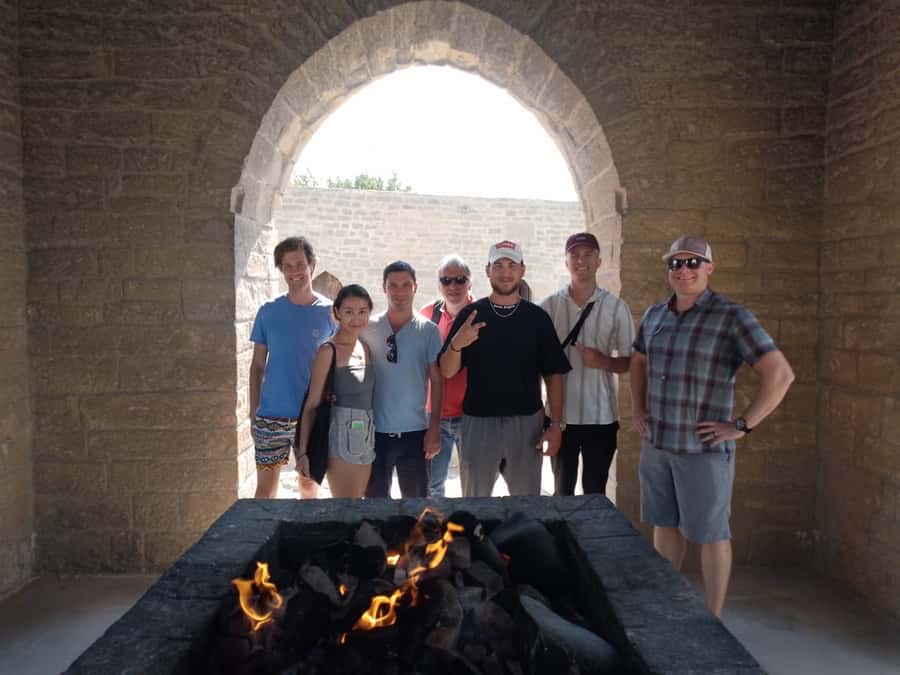
The tour provides a live guide in English and Russian, and you’ll ride in a minivan or van. This matters because both sites have real explanations you’ll want translated clearly. Fire worship traditions, the gas flow setup at Ateshgah, and the tectonic and volcanic reasoning behind Yanardag are the kinds of details that turn a quick stop into a memorable one.
Also, the tour is wheelchair accessible, which is a genuine plus. If you are managing mobility needs, this kind of organized, vehicle-based tour can make the whole day easier.
Group size is flexible. There’s private group availability, which is good if you want quieter pacing or more questions than a standard group might allow.
And yes, the guide experience can be the difference between an okay visit and a great one. When the guide is strong, you’ll walk away understanding what you saw, not just that you saw it.
Who this tour suits, and who should rethink it
This is best for you if:
- You want a compact Absheron day that still hits the two signature fire sites
- You like guided context, especially about why the flames exist and how the temples were used
- You’re traveling solo and want a low-stress plan with transport handled
You might want to rethink it if:
- You need a strict schedule with zero timing wiggle room. If your day depends on catching another reservation right after, consider giving yourself buffer time.
- You like long, unhurried exploration. With only 3 hours, there’s not much room to wander slowly at both stops.
If you’re the kind of traveler who enjoys “small space, big concept,” this tour fits your style. A fortress-temple courtyard and a hillside wall of flame are not “see everything” sights. They are “understand this place” sights, and you’ll get that with a good guide.
Should you book the Ateshgah and Yanardag half-day tour?
I’d book it if you want a value-packed, guided look at Baku’s fire tradition without spending a whole day on logistics. The pairing makes sense: Ateshgah explains the human side of fire worship in a built environment, and Yanardag explains the natural side of why the ground keeps burning.
Do be cautious about timing. Before you go, confirm pickup details and departure expectations so your half-day stays half-day. If you can handle a little operational uncertainty, this is a great way to see why Baku and Absheron are famous for fire, not just architecture.
FAQ
How long is the Baku Ateshgah Fire Temple and Burning Mountain tour?
The duration is 3 hours.
What are the main stops on this half-day tour?
You visit Ateshgah Fire Temple and Yanardag State Historical, Cultural and Natural Reserve.
Where is Ateshgah located in relation to Baku?
Ateshgah is about 21 km east of Baku.
How long does it take to get from Ateshgah to Yanardag?
The transfer time is about 35 to 40 minutes.
Are entry tickets included?
Yes, the tour includes entry tickets for Ateshgah and Yanardag.
What language is the guide available in?
The live guide is available in English and Russian.
Is transportation included, and will there be a van or minivan?
Yes. The tour includes transportation by minivan or van.
More Half-Day in Baku
- Baku: Half-Day Gobustan and Mud Volcanoes Tour with Entry
★ 4.7 · 144 reviews - Half-Day Baku City Sightseeing Tour
★ 5.0 · 23 reviews - Half-Day Baku Private Walking Tour with Pickup
★ 5.0 · 5 reviews
Latest Baku reviews
- Gobustan Magic of Mud Volcanoes and Ancient Petroglyphs★ 5.0 · 3 reviews
- Gobustan Tour and Mad Volcanoes – tour to stone age★ 5.0 · 3 reviews
- Gobustan & Mud Volcano★ 4.5 · 3 reviews
- A Full Day Adventure: Khinalug, Guba & Candy Mountains Tour★ 5.0 · 3 reviews
- All destinations included Baku city tour for 1 day★ 5.0 · 3 reviews
- Small-Group Day Trip to Gobustan, Mud Volcanoes, Ateshgah & Yanar Dagh★ 4.5 · 3 reviews
- A Private Day Trip to Shahdag Ski Resort★ 5.0 · 3 reviews
- Private Sheki Tour – Four Regions of Azerbaijan in one day★ 5.0 · 3 reviews
Ateshgah Fire Temple, compared.
Gobustan, Volcanoes, Fire Temple and Yanardag Day Trip
Read our review →
Gobustan & Mud, Fire Temple, Burning Mountain (Group & Private)
Read our review →
Mud Volcan-Fire Temple and Mountain Tour/Entrance inc
Read our review →
Gobustan, Mud volcanoes, Fire temple, Fire mountain PRIVATE TOUR
Read our review →
Gobustan & Mud, Fire Temple, Burning Mountain, H.A. Center
Read our review →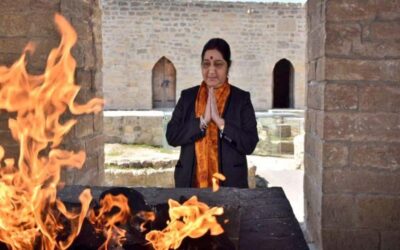
Gobustan, Mud Volcanoes, Fire Temple, & Yanar Dag Tour
Read our review →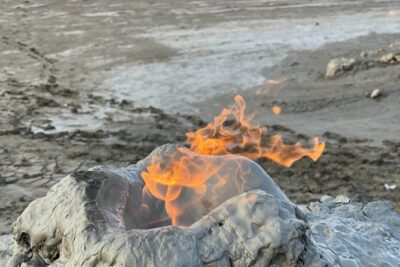
Qobustan rock arts, Mud Volcanoes, Fire temple Ateshgah, Yanardag
Read our review →Browse the lists this tour appears in